English

News
Home / News / Industry News / Boiler Preventive Maintenance: A Practical Guide for Industrial Plants

+86-13961025664
Content
Boiler preventive maintenance is the difference between a planned spring outage and a 2 a.m. phone call when your steam header drops pressure. A coal chemical plant in northwestern China once ignored sootblower performance for three months; the resulting slagging on a convection bank cut boiler efficiency by 4.2 percent and forced an unplanned 38-hour shutdown. That single event cost more than five years of routine preventive maintenance tasks combined. The lesson is straightforward: boiler preventive maintenance is not an option for industrial plants that value uptime, fuel efficiency, and safety compliance.
For plant managers in metallurgy, power generation, coal chemical, and synthetic ammonia sectors, the boiler is rarely a standalone asset. It sits inside a heat recovery train that includes economizers, air preheaters, waste heat boilers, and dust collectors. When one component drifts out of specification, the entire train suffers. A boiler preventive maintenance program must therefore look beyond the pressure vessel itself and address the full flue gas and water-steam loop.
This guide gives you the field-tested sequence: what to check, how often, which measurements actually predict failure, and where to focus when your boiler operates under high-temperature, high-dust, or high-corrosion conditions. You will also see how a disciplined program extends equipment life, reduces fuel spend, and keeps you ready for regulatory inspections.
The first rule of boiler preventive maintenance: treat water chemistry and combustion tuning as production variables, not as maintenance afterthoughts.
A practical boiler preventive maintenance program covers six systems: feedwater and steam, fuel and combustion air, flue gas and heat recovery, controls and safety interlocks, pressure envelope and structural supports, and auxiliary equipment such as fans, pumps, and sootblowers. Each system has distinct failure modes, and each needs a schedule that matches its duty cycle. A fire-tube boiler running on natural gas at steady load requires a very different PM plan from a water-tube waste heat boiler recovering coke oven flue gas with high particulate loading.
The table below summarizes typical preventive maintenance intervals for industrial boilers. Use it as a starting point, then adjust based on your fuel quality, water treatment results, and operating hours. A plant that runs 8,000 hours per year should shorten monthly tasks to every 500 to 600 operating hours, while a peaking boiler may safely extend some checks.
| Interval | Primary focus | Responsible role | Key acceptance check |
|---|---|---|---|
| Daily | Water level, blowdown, flame condition, stack opacity | Boiler operator | No carryover, no visible smoke, drum level stable |
| Weekly | Burner linkage, fan vibration, sootblower sequence | Maintenance technician | Linkage moves freely, vibration below 4.5 mm/s RMS |
| Monthly | Water chemistry, safety valve lift test, refractory inspection | Water chemist and millwright | pH 10.5–11.5, phosphate within range, no hot spots |
| Quarterly | Tube wall thickness, economizer fouling, control calibration | Inspection engineer | Wall loss below 0.3 mm/year, no >10% blockage |
| Annual | Internal inspection, hydro test, burner tuning, safety interlock proof | Authorized inspector and OEM | All interlocks trip within 2 seconds, efficiency within 1% of baseline |
Notice that daily tasks belong to operations, not to the maintenance department. A boiler preventive maintenance program fails when operators treat log sheets as paperwork. The most reliable plants give operators authority to stop a drifting boiler before it becomes a repair job. That authority depends on clear alarm limits: drum level deviation beyond 25 mm, stack temperature rise above 15 degrees Celsius from baseline, or flue gas oxygen outside 2 to 4 percent should trigger immediate investigation.
Assign daily boiler checks to operations, monthly and quarterly checks to maintenance, and annual inspections to a qualified third party.
The financial case for boiler preventive maintenance is built on four numbers: fuel cost, unplanned downtime, repair cost, and asset life. A 100-ton-per-hour industrial boiler burning coal gas can consume over 80 million yuan of fuel per year. A 2 percent efficiency loss from fouled heat transfer surfaces costs 1.6 million yuan annually. Scale and soot are not cosmetic; they are direct fuel taxes. Cleaning surfaces on schedule removes that tax without capital investment.
Downtime is the second number. Unplanned boiler outages in continuous process plants cascade into production loss. A metallurgy sinter plant that loses its waste heat boiler may have to vent hot flue gas, increasing emissions and reducing steam supply to the turbine. The cost of one avoided outage often pays for an entire year of preventive maintenance, including spare parts and specialist labor.
Repair cost and asset life are linked. Tube failures, refractory damage, and fan erosion accelerate when maintenance is deferred. A pump bearing changed during a planned shutdown costs a few hundred yuan; the same bearing failure that seizes a pump and floods the boiler bay can cost hundreds of thousands in water damage, emergency labor, and lost steam. Similarly, a well-maintained boiler can operate 25 to 30 years, while a neglected one may need retubing at year 12. Boiler preventive maintenance is therefore a capital preservation strategy, not just a maintenance expense.
Every 1 percent of boiler efficiency recovered through cleaning and tuning is worth more than the annual cost of a complete PM program in most industrial plants.
More than 40 percent of industrial boiler failures trace back to water chemistry. Scale, corrosion, and carryover damage tubes, drums, and steam lines long before any mechanical wear appears. A boiler preventive maintenance program must start with feedwater and boiler water testing. Key parameters include hardness, pH, conductivity, phosphate, sulfite, silica, and dissolved oxygen. For medium-pressure boilers, dissolved oxygen should stay below 15 parts per billion with chemical scavenging; for lower-pressure units, below 100 parts per billion is often acceptable.
Blowdown is the primary control for dissolved solids. Bottom blowdown removes sludge, while surface blowdown controls conductivity. Operators should perform bottom blowdown daily, but not as a fixed-time ritual. The correct duration depends on the actual sludge volume, which you can estimate from water clarity in the sight glass and lab tests. Over-blowing wastes energy and treatment chemicals; under-blowing leads to carryover and scale.
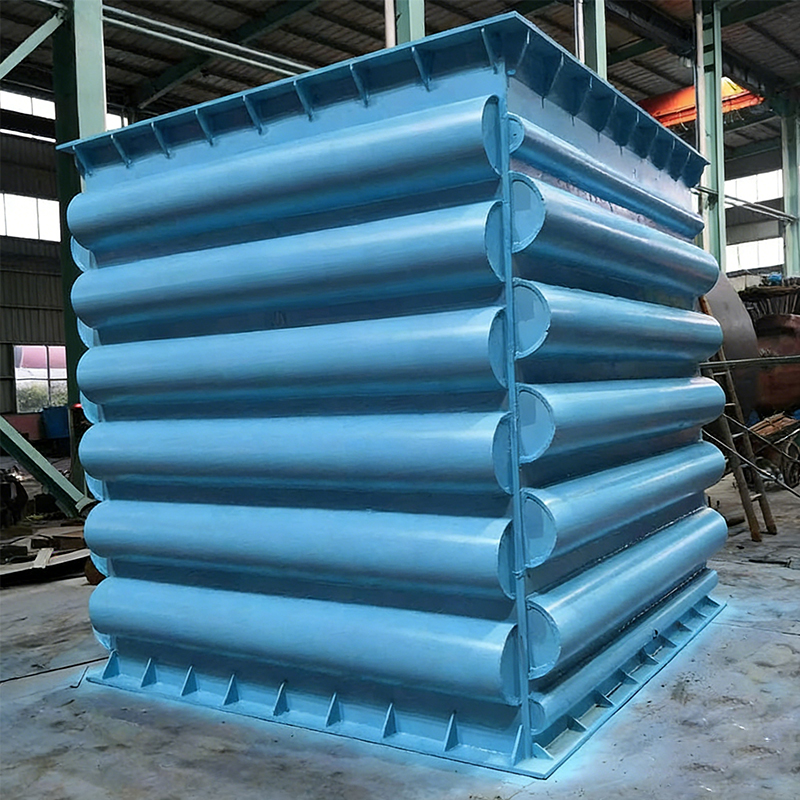
Corrosion control also depends on material selection in the heat recovery train. In high-temperature, high-corrosion flue gas service, standard carbon steel economizers may fail within two to three years. Nickel-based brazed economizers use a metallurgical bond that resists acid dew point corrosion and high dust erosion, making them a practical choice for coke oven gas, sintering flue gas, and other aggressive streams. When specifying replacement surfaces, match the alloy and joining method to the actual flue gas analysis, not to a generic boiler specification.
Water chemistry is the only boiler preventive maintenance task that operates every minute of every day; treat it as continuous process control, not as a weekly test.
Combustion inefficiency hides in small deviations. A burner that drifts from 3 percent excess oxygen to 6 percent may still produce steam, but it sends extra heat up the stack. Boiler preventive maintenance for the combustion system includes flame scanner cleaning, fuel valve leak testing, linkage lubrication, and flue gas analysis. For gas-fired boilers, check the gas pressure regulator and air-fuel ratio trim. For coal or biomass units, inspect fuel feed, primary air, and overfire air dampers.
Air preheaters deserve special attention because they recover heat from the flue gas and preheat combustion air. Fouling or corrosion in the air preheater raises draft loss and reduces boiler efficiency. During monthly inspections, measure differential pressure across the air preheater. A rise of 0.5 kPa above baseline usually indicates fouling or cold-end corrosion. Sootblowing frequency may need adjustment based on fuel sulfur and moisture content.
If your plant operates in metallurgy or chemical processing, an air preheater supplier with experience in corrosive flue gas can help you select the right tube material and seal design. Some manufacturers offer glass or enamel-coated tubes for high-sulfur service, while nickel-based brazed or welded designs suit high-temperature and high-dust conditions. The maintenance schedule should include annual inspection of expansion joints, bypass dampers, and fire suppression systems in the air preheater.
Measure flue gas oxygen and air preheater differential pressure weekly; these two readings predict efficiency loss weeks before steam output changes.
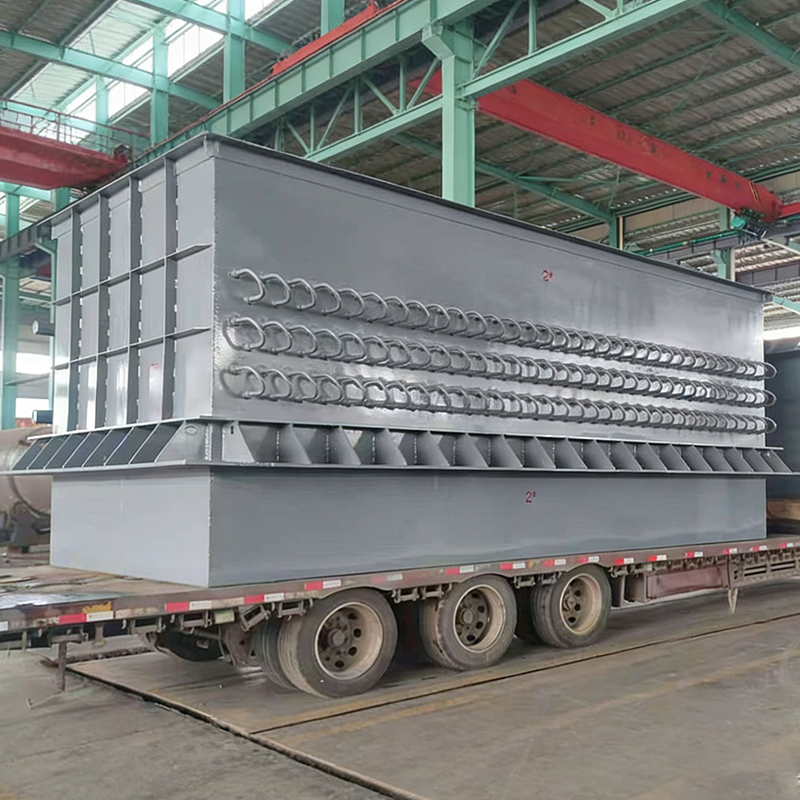
Waste heat boilers and economizers operate under the most punishing conditions in the plant: high temperature, high dust, and often acidic or alkaline condensates. Boiler preventive maintenance for these surfaces focuses on fouling, erosion, and corrosion. Sootblower operation, tube wall thickness measurement, and flue gas temperature profiling are the three core activities. A waste heat boiler that loses 5 percent of its heat transfer capacity may force downstream process fans to run at higher speed, increasing electricity consumption and reducing overall system efficiency.
For coke oven flue gas waste heat boilers, the main threats are tar condensation, ammonium salt deposits, and tube erosion from coke particles. The maintenance plan should include quarterly inspection of the inlet transition, tube bundle, and outlet duct. If you detect localized hot spots or tube bulges, reduce load and schedule repair before a tube rupture. In sintering waste heat boilers, dust loading can be extreme, so sootblower coverage and dust hopper level control determine how often you need to offline wash the tube bundle.
Condition data matters more than calendar intervals for heat recovery equipment. Install thermocouples on the tube wall and flue gas inlet and outlet. A sudden drop in outlet gas temperature or rise in tube wall temperature signals internal fouling or flow imbalance. Use that data to adjust sootblowing frequency and schedule water washing only when differential pressure or heat transfer coefficient crosses a threshold.
For waste heat boilers, sootblowing and water washing are not interchangeable; sootblowing handles loose deposits, water washing removes bonded scale and must be planned with effluent treatment.
A written checklist turns boiler preventive maintenance from good intentions into repeatable practice. The following tasks are field-proven in coal chemical, power, and metallurgy plants. Adjust the intervals for your operating profile, but do not skip the safety-related items.
The annual outage is the only time you can inspect the pressure envelope from the inside; protect that window with a detailed scope and qualified inspection team.
Preventive maintenance becomes powerful when you connect inspection data to operating trends. Consider a typical industrial boiler that runs 8,000 hours per year. Without a structured program, operators react to failures after they occur. With condition monitoring, they see the early signals: a slow rise in stack temperature, a gradual increase in fan current, a shift in water conductivity, or a growing differential pressure across an economizer. These signals give you weeks of warning before a forced outage.
To build that early warning system, start by defining baseline values for each critical parameter. Baseline should be recorded at a known clean condition, at stable load, and with calibrated instruments. Then set alarm thresholds at 5 percent, 10 percent, and 15 percent deviation from baseline. The first threshold triggers investigation; the second triggers maintenance planning; the third triggers an immediate load reduction or shutdown decision.
Next, choose the right monitoring technology for your budget and risk profile. Vibration sensors on fans and pumps are inexpensive and highly effective. Thermocouples on boiler tubes and flue gas ducts reveal fouling and flow imbalance. Ultrasonic thickness measurement tracks erosion and corrosion. Water chemistry analyzers provide continuous conductivity and pH data, reducing manual testing error.
The chart below compares typical performance outcomes for industrial boilers with and without a mature preventive maintenance program. The data represents aggregated field experience from coal chemical, metallurgy, and power plants operating water-tube and waste heat boilers. It is not a guarantee, but it shows the direction and rough magnitude of improvement that disciplined planning can deliver.
The first observation from this chart is the scale of downtime reduction. Boilers with a mature preventive maintenance program experience roughly 65 percent fewer unplanned outages than those that rely on run-to-failure. That difference comes from early detection of tube leaks, fan imbalance, and control drift. In a continuous process plant, avoided downtime often represents the largest single financial benefit of the program, dwarfing the direct labor and parts cost.
The second trend is fuel consumption. An 8 percent reduction is realistic when you combine water chemistry control, sootblowing optimization, and burner tuning. Fuel savings scale with boiler size, so a 100-ton-per-hour boiler may save millions of yuan annually. The key is to treat fuel savings as a measurable outcome of specific maintenance tasks, not as a vague benefit. Track stack temperature, excess oxygen, and unburned carbon to prove the improvement.
The third insight is repair cost reduction, which reaches about 45 percent. Preventive maintenance avoids secondary damage. A worn pump bearing replaced early costs little; the same bearing failure that damages the shaft and seal can multiply the repair cost by ten. Similarly, a small refractory crack repaired during a planned outage prevents casing burnout and tube overheating during operation. The chart shows the cumulative effect of many small, timely interventions.
Fourth, service life extension of roughly 40 percent reflects the difference between a boiler that operates within design limits and one that repeatedly cycles through thermal stress, corrosion, and fouling. Pressure vessel fatigue is cumulative. Every unnecessary thermal cycle consumes remaining life. Preventive maintenance keeps the boiler in steady, clean condition, reducing stress and slowing degradation. That directly improves the asset's residual value and delays capital replacement.
Fifth, safety incident reduction is the most important non-financial benefit. Boiler explosions, steam releases, and fuel gas leaks are rare but catastrophic. A preventive maintenance program enforces regular testing of low-water cutoffs, safety valves, flame scanners, and gas train components. These devices are the last line of defense, and they only work if they are tested. The chart's 80 percent reduction in safety incidents reflects the power of routine proof-testing and operator training.
When you implement condition monitoring, start with the parameters that cause the most downtime in your plant. For many waste heat boilers, that is tube wall temperature and flue gas differential pressure. For fire-tube boilers, it is water level control and burner flame stability. Do not try to monitor everything at once. Add one parameter per quarter, validate the data, and train operators to act on trends rather than single readings.
Finally, remember that condition monitoring is not a substitute for inspection. Sensors tell you where to look; they do not replace the human eye on a tube sheet or the feel of a bearing housing. Use data to prioritize inspection routes, then document what you find. That combination of quantitative trends and qualitative observations is what makes boiler preventive maintenance both efficient and reliable.
Condition monitoring turns boiler preventive maintenance from a calendar-driven cost into a data-driven investment with measurable returns in uptime, fuel, and safety.
Understanding failure modes helps you write a targeted boiler preventive maintenance plan. The table below lists frequent boiler and heat recovery failures, their root causes, and the preventive actions that address them. Use this table during annual program reviews to confirm you are covering the highest-risk items.
| Failure mode | Typical root cause | Preventive action | Detection method |
|---|---|---|---|
| Tube scale rupture | High hardness, inadequate blowdown | Water chemistry control, daily blowdown | Water tests, tube wall temperature |
| Economizer corrosion | Flue gas below acid dew point | Feedwater temperature control, alloy selection | Wall thickness, visual inspection |
| Burner flame instability | Dirty scanner, linkage wear, fuel pressure drift | Monthly cleaning, linkage lubrication, tuning | Flame scanner signal, combustion analysis |
| Fan erosion and imbalance | High dust loading, worn blades | Pre-dust removal, vibration monitoring | Vibration trend, blade thickness |
| Safety valve leakage | Deposits on seat, spring fatigue | Annual lift test, seat cleaning | Visual and pressure test |
| Refractory spalling | Thermal cycling, anchor corrosion | Controlled heat-up, monthly inspection | Visual, infrared thermography |
The pattern is consistent: most failures begin as small deviations that a trained operator or technician can detect. Tube scale starts as a thin deposit that raises wall temperature by a few degrees. Economizer corrosion begins at a cold spot where flue gas drops below the acid dew point. Burner instability starts with a slightly dirty flame scanner. Preventive maintenance is the practice of finding and correcting these small deviations before they combine into a failure.
For plants in coal chemical and synthetic ammonia service, pay special attention to hydrogen damage and caustic embrittlement. These mechanisms require strict control of boiler water pH and phosphate chemistry. If your plant uses demineralized water, verify that the mixed bed regeneration does not leak sodium or silica. A single upset in water treatment can cause tube damage that takes months to appear.
Map every failure mode in your boiler and heat recovery train to a specific preventive task; if a failure mode has no task, your PM program has a gap.
Not every plant can perform all boiler preventive maintenance in-house. Internal inspection, pressure part repair, and burner tuning often require specialized skills, certified welders, and code stamps. When you evaluate a service partner or equipment supplier, look beyond price. Ask for proof of design and manufacturing qualifications. In China, boiler and pressure vessel suppliers should hold the appropriate special equipment manufacturing license. For international projects, ASME certification for boiler and pressure vessel design and fabrication is a strong indicator of quality system maturity.
Experience in your specific flue gas environment matters more than general boiler experience. A supplier that has built heat recovery equipment for coke oven flue gas, sintering flue gas, or oxygen-blown converter gas will understand the corrosion and fouling mechanisms you face. That understanding translates into better material selection, more effective sootblower placement, and realistic maintenance recommendations. A general boiler manufacturer may under-estimate dust erosion or acid dew point corrosion, leading to premature failure.
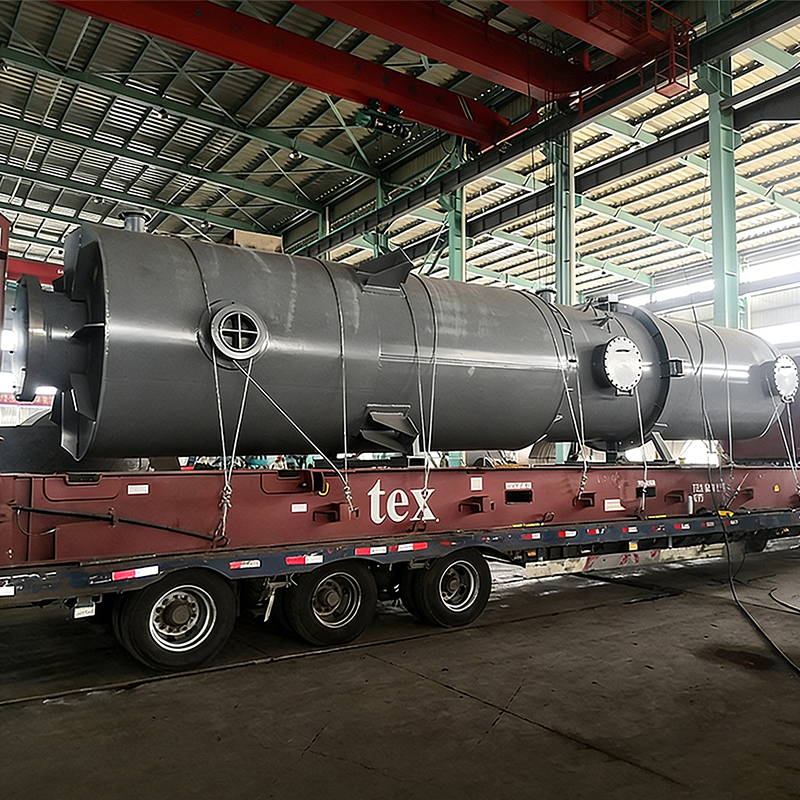
Ask potential partners about their field service capabilities. Can they provide annual inspection, tube thickness measurement, burner tuning, and emergency repair? Do they stock critical spares such as economizer modules, air preheater baskets, and safety valves? A supplier with manufacturing depth can often deliver replacement parts faster than a trading company. As an industrial flue gas waste heat recovery manufacturer, Shineng integrates design, manufacturing, and system commissioning, which helps plants avoid the finger-pointing that occurs when equipment and service come from different vendors.
Finally, request references from similar plants and visit an installed unit if possible. Talk to the maintenance team about response time, documentation quality, and whether the supplier's recommendations actually improved reliability. A good partner will welcome that scrutiny because it demonstrates confidence in their engineering and service.
Choose a boiler preventive maintenance partner with proven experience in your exact flue gas chemistry and a manufacturing base that can supply code-compliant replacement parts.
Most industrial boilers require an internal inspection every year, but the interval can be extended to two years if operating history, water chemistry, and previous inspections justify it. Waste heat boilers in high-dust service often need annual inspection because erosion and fouling rates are less predictable. Always follow local regulatory requirements, which may set maximum intervals.
Yes, but only with data. Sootblowing consumes steam or compressed air, so excessive blowing wastes energy. However, reducing frequency without monitoring flue gas differential pressure and stack temperature risks fouling and efficiency loss. Establish a baseline, then extend the interval gradually while watching heat transfer performance. If stack temperature rises more than 10 degrees Celsius above baseline, restore the original frequency.
For most industrial boilers, pH, conductivity, hardness, and dissolved oxygen are the top four. pH controls corrosion and scale formation; conductivity indicates dissolved solids and blowdown needs; hardness reveals treatment failures; dissolved oxygen drives pitting corrosion. Phosphate and sulfite are also important for specific pressure ranges. Test daily and trend the results.
Track four metrics: unplanned downtime hours, fuel consumption per ton of steam, repair cost per operating hour, and safety incident rate. Compare them before and after implementing the program. In most plants, the fuel savings alone pay for the program within the first year. Downtime avoidance and safety improvements provide additional justification for management approval.
Critical spares include water level gauge glass, flame scanners, pressure transmitters, safety valves, burner nozzles, gaskets, and sootblower elements. For heat recovery boilers, keep at least one spare economizer module or air preheater basket if lead times exceed two weeks. Review spare parts consumption annually and adjust inventory based on actual failure history.
The best boiler preventive maintenance program is one that operators understand, maintenance technicians can execute, and management can measure.
Start with a criticality ranking of your boiler and heat recovery equipment. Rank each asset by safety impact, production impact, and repair cost. Focus your most detailed preventive maintenance tasks on the highest-ranked assets. For a typical coal chemical plant, the waste heat boiler and main steam header are usually critical, while the auxiliary deaerator may be less so.
Next, create a 52-week calendar that distributes tasks evenly. Avoid overloading a single month. Combine tasks that require the same isolation or shutdown. For example, schedule burner tuning, flame scanner calibration, and fuel valve leak testing during the same planned outage. This reduces startup and shutdown losses and improves technician efficiency.
Then define clear acceptance criteria for each task. A task is not complete until the measured value meets the standard. "Inspect refractory" is not a task; "inspect refractory and record crack width and depth; repair any crack wider than 3 mm" is a task. Specific criteria remove ambiguity and make it possible to audit program effectiveness.
Finally, review the program quarterly. Analyze work order history, failure data, and condition monitoring trends. Adjust intervals based on actual experience. If a task consistently finds no problems, consider extending the interval. If a failure occurs, add or modify tasks to prevent recurrence. Boiler preventive maintenance is a living program, not a static document.
To support that living program, leverage supplier expertise where it adds value. Equipment manufacturers can provide baseline performance data, recommended spare parts, and inspection services. For plants running waste heat boilers and heat recovery systems, working with a manufacturer that understands both design and operation shortens the learning curve. You can read how metallurgy waste heat boilers save plant energy to see the financial logic behind heat recovery maintenance. You can also learn more about the industrial flue gas waste heat recovery manufacturer behind many of these systems and how their engineering team supports long-term reliability.
Review your boiler preventive maintenance schedule every quarter and update it with actual failure and inspection data; a schedule that never changes is a schedule that misses real risks.
Boiler preventive maintenance depends on equipment that is designed for your flue gas conditions and supported by a manufacturer who understands the operating risks. Whether you operate a coke oven waste heat boiler, a sintering waste heat boiler, or a nickel-based brazed economizer, the right design and service partnership can make your maintenance program more effective.
Use the links below to explore related resources and equipment options.
For plants in coal chemical, metallurgy, power, and synthetic ammonia industries, combining a disciplined boiler preventive maintenance program with properly selected heat recovery equipment delivers the best return on investment.
We will help you move towards success.

Maqiao North High tech Industrial Agglomeration Zone, Jingjiang City, Taizhou City, Jiangsu Province

+86-18752676699 / +86-13961025664
 Previous