

 English
  русский
 Español
News
Home / News / Industry News / Blow Down in Boiler: Types, Procedures, Safety Tips, and System Design

+86-13961025664
Content
Boiler blow down is a controlled removal of concentrated boiler water from the steam drum or bottom headers to keep suspended and dissolved solids within safe limits. It is not a sign of poor operation; it is a necessary part of industrial boiler water chemistry management. An effective blowdown plan protects heat-transfer surfaces, improves steam quality, and reduces maintenance costs. For plant engineers and procurement teams, the challenge is to balance water chemistry control with energy efficiency. This guide explains blow down in boiler fundamentals, safe operating procedures, heat-recovery options, and the criteria for choosing reliable equipment and suppliers.
Blowdown is the deliberate discharge of a portion of boiler water and its replacement with feedwater that has a lower dissolved-solids content. Every boiler feedwater brings in impurities such as calcium, magnesium, silica, chloride, and alkalinity. When feedwater turns to steam, those impurities remain behind and accumulate in the boiler water. As total dissolved solids (TDS) rise, the water becomes more conductive, tends to foam, and can release droplets containing dissolved solids with the steam. That problem is known as carryover. Scale starts to deposit on tube and drum surfaces when calcium and magnesium exceed their solubility limits. The purpose of boiler blowdown is therefore to keep TDS and suspended solids below the threshold where scaling, corrosion, or carryover can occur. Blowdown can be manual or automatic, intermittent or continuous, depending on the boiler type and water-treatment strategy.
Scale formation on boiler tubes is the most common consequence of insufficient blowdown. Even a thin layer of scale acts as an insulator, slowing heat transfer and causing tube metal temperatures to rise. Over time, this leads to overheating, tube failure, and costly repairs. Carryover has an equally serious effect on steam quality. Steam containing boiler water carries dissolved salts that can deposit on turbine blades, heat-exchanger surfaces, and process equipment. Corrosion, often under scale, further weakens pressure parts. Blowdown itself may seem like a small water loss, but in energy terms every discharge sends saturated water out of the boiler. The challenge is to remove enough solids to keep the boiler clean without wasting excessive heat. Plant operators should therefore measure TDS or conductivity at a defined frequency and set a target range based on boiler pressure and manufacturer recommendations.
Blowdown rates directly influence overall boiler efficiency because the hot water that leaves the boiler must be made up by heating cold feedwater. In many industrial plants, the blowdown rate is not measured, so energy losses are hidden inside routine operation. A visual comparison helps plant teams understand the magnitude of this loss across common blowdown rates. The horizontal bars below show typical fuel energy losses for blowdown rates of 1%, 2%, 5%, and 10% at an operating pressure around 10 to 15 bar. The values are approximate and depend on feedwater temperature, boiler pressure, and heat recovery equipment.
The chart shows that a 1% blowdown rate creates a relatively small fuel penalty, although it may still be worth recovering. At 2%, a plant begins to feel the cost in fuel bills if the boiler operates continuously. At 5%, the energy loss becomes a major operating expense, especially for boilers over 10 t/h. At 10%, the fuel loss can be 3 to 5% or higher, which often signals poor feedwater treatment or faulty control. Reducing the blowdown rate from 10% to 2%, for example, can improve boiler efficiency by roughly 3%. For a 20 t/h boiler operating 8000 hours per year, this can save hundreds of megawatt-hours equivalent in fuel. The best approach is to sample boiler water regularly and adjust blowdown to maintain target TDS. Many operators use a simple rule: blow down only as much as necessary to keep TDS below the limit specified for the boiler pressure. Heat recovery can reduce the cost of the unavoidable blowdown. If a continuous blowdown stream is sent through a heat exchanger, most of the enthalpy can be returned to the system. That is why modern plants treat blowdown not as waste but as a recoverable resource.
Boiler blowdown is generally divided into two main methods: bottom blowdown and surface blowdown. They target different types of contamination and operate on different schedules. Bottom blowdown draws off sludge and sediment that settle in the lowest parts of the boiler. Surface blowdown removes dissolved solids and foam that concentrate near the waterline. The table below summarises the main differences.
| Parameter | Bottom Blowdown | Surface Blowdown |
|---|---|---|
| Primary target | Sludge, sediment, suspended solids | Dissolved solids, foam, scum |
| Location | Bottom of mud drum and headers | Near the waterline in the steam drum |
| Operating method | Intermittent, short bursts | Continuous or intermittent skimmer |
| Valve discharge | High flow, low duration | Low flow, high duration |
| Heat recovery suitability | Less suitable due to intermittent flow | Very suitable for continuous heat recovery |
Surface blowdown is often operated continuously to maintain a stable TDS level. A small stream of water is withdrawn from the steam drum and replaced by feedwater. Automatic controllers measure conductivity and modulate a valve to hit the target setpoint. Intermittent blowdown, by contrast, is a periodic manual operation. It is more effective for removing sludge from the lowest parts of the boiler. Continuous blowdown is generally preferred for controlling dissolved solids, while intermittent bottom blowdown remains necessary for sediment removal.
A well-designed blowdown line typically includes a slow-opening valve, a quick-opening valve, a tee arrangement, and a blowdown tank or cooling vessel. The slow-opening valve is usually installed closest to the boiler and is used to throttle flow the first time. The quick-opening valve is placed downstream and acts as an on/off control. Sampling coolers and conductivity probes are added for water-quality monitoring. Automatic systems replace the manual quick-opening valve with a motorised or air-actuated modulating valve.
Safe manual blowdown follows a strict sequence. The exact sequence can vary with the valve arrangement, but the main principle is to avoid pressurising or heating a closed section of the pipe.
Operators must stand away from the discharge line and wear full personal protective equipment. Hot water and flash steam are released at high velocity and can cause severe burns. Never leave a boiler blowing down unattended. If the pipe vibrates or the valves leak, stop the operation and inspect the system before continuing. In facilities that require remote or automatic operation, the same safety interlocks should be applied to motorised valves.
Blowdown streams leave the boiler at saturation temperature. In a 10 bar boiler, that is around 180°C; in a 40 bar boiler, it can be over 250°C. Discharging this hot water directly to drain wastes a large amount of thermal energy. A flash tank first drops the pressure and converts part of the hot water into low-pressure steam, which can be used in the deaerator or for space heating. The remaining hot liquid still contains heat. A heat exchanger can transfer this residual heat to makeup water, boiler feedwater, or process water. This simple retrofit often pays back in less than two years, especially in continuous blowdown systems.
A shell-and-tube heat exchanger is a common choice for blowdown cooling and heat recovery because it can handle high pressure, high temperature, and thermal shock. It also gives the plant flexibility to use the recovered heat in multiple services.
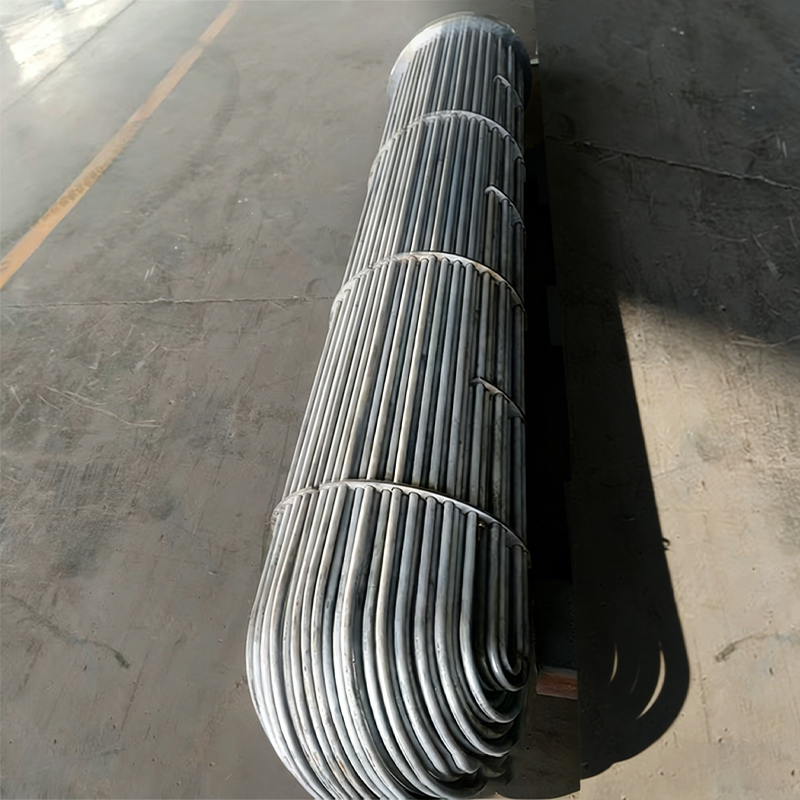 Shell and Tube Heat Exchanger for High-Pressure Blowdown CoolingThis robust heat exchanger handles high pressure, temperature, and thermal shock, making it ideal for blowdown cooling and heat recovery. Its flexible design suits multiple plant services.View Product →
Nickel-based brazed economizer technology is another proven way to capture heat from hot water or flue gas streams where corrosion resistance is critical. This type of economizer is designed for demanding industrial environments and can be integrated with feedwater preheating.
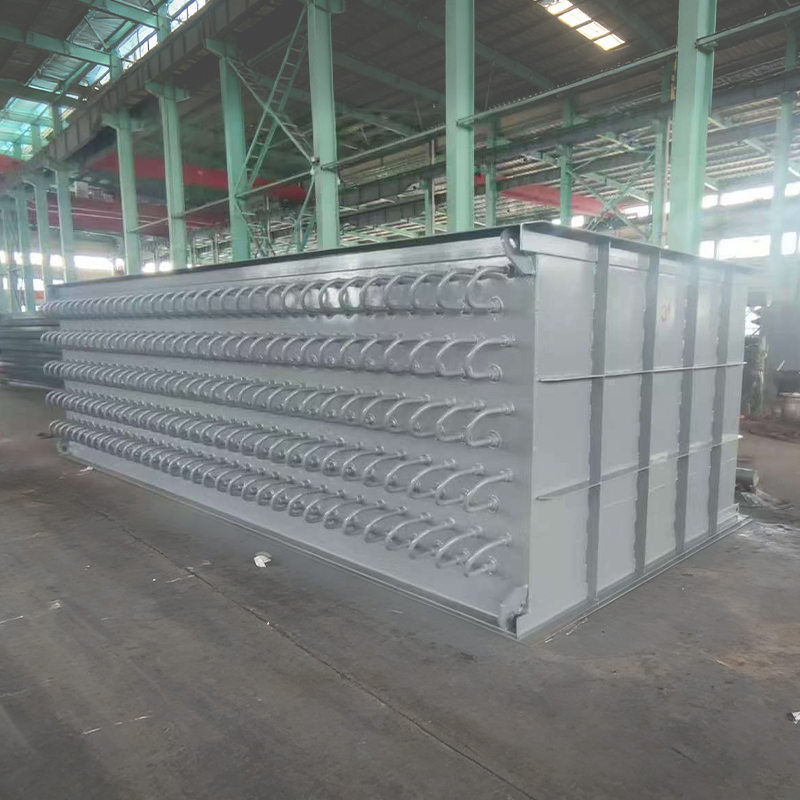 Nickel-based Brazed Economizer for Corrosive Flue Gas Heat RecoveryDesigned for demanding industrial environments, this economizer offers strong corrosion resistance and high heat transfer efficiency, helping recover heat from hot water or flue gas streams.View Product →
For facilities that prefer an integrated solution, evaporator and heat exchanger packages can combine flash cooling, liquid heating, and condensate polishing into one engineered unit. Such systems are useful when the boiler plant requires a complete recovery loop rather than a single component.
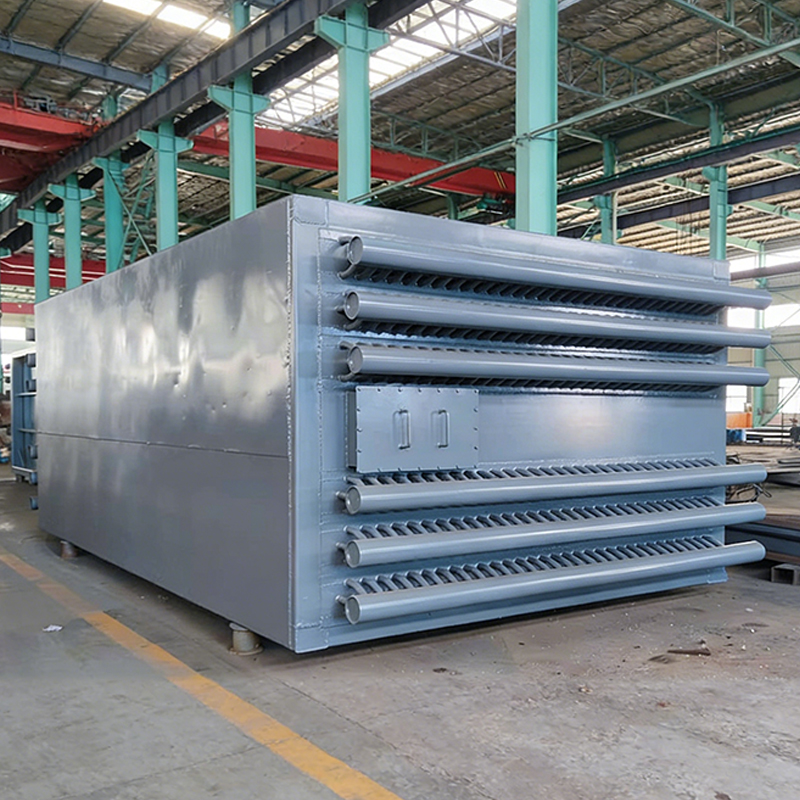 Integrated Evaporator and Heat Exchanger Package for Complete Recovery LoopsThis packaged system combines flash cooling, liquid heating, and condensate polishing into one engineered unit, useful for boiler plants requiring a full recovery loop rather than single components.View Product →
When planning a blowdown heat-recovery project, consider the operating hours, blowdown flow rate, and how much low-pressure steam can be consumed on site. The recovered heat can preheat makeup water, raise deaerator temperature, or feed a low-temperature hot water circuit. In many industries, this heat recovery is combined with flue-gas heat recovery from the boiler itself to maximise overall plant efficiency.
Manual bottom blowdown is still common for sludge removal, but continuous TDS control is more precise. Conductivity probes monitor boiler water quality and send signals to a modulating control valve. The valve opens just enough to maintain the desired setpoint. This reduces water loss compared with manual sampling, prevents carryover, and stabilises steam quality. The controller can be tied into a plant SCADA system for trend logging and alarm management.
A well-controlled blowdown programme also reduces chemical consumption. When TDS stays within a narrow band, dosing can be optimised and scale-inhibitor levels become more predictable. This is particularly important for modern high-pressure boilers, where even small changes in water chemistry can affect boiler reliability.
When upgrading a boiler plant, the blowdown system should be chosen with the same care as the burner or steam drums. The supplier should understand boiler water chemistry, pressure vessel design, and materials selection. For pressure-bearing components, ASME certification and a domestic pressure vessel licence are important qualifications. A manufacturer with a history of building heat exchangers, economizers, and waste heat boilers can integrate blowdown heat recovery into the unit’s overall thermal system. Examples of such industrial waste heat recovery experience are visible in metallurgy waste-heat boiler applications, where similar heat-recovery principles apply across different flue-gas and hot-water streams.
Before selecting a supplier, ask for case studies, material certifications, and delivery schedules. Confirm that the blowdown tank or heat exchanger is built according to applicable codes and that the control system can communicate with your existing PLC, DCS, or SCADA platform. A supplier that can provide after-sales support, spare valves, and replacement heat-transfer cores reduces downtime risk. Large project buyers and OEM buyers should also consider whether the vendor can supply a complete heat-recovery package rather than a single shell-and-tube exchanger. For OEM and wholesaler buyers, it is also important to confirm interchangeability with existing valves, flanges, and control signals.
Evaluate the manufacturer’s quality-management system and inspection capabilities. Certified welders, hydrostatic testing, and documented material traceability are signs of a reliable supplier. The best suppliers can also advise on blowdown control setpoints based on actual feedwater analysis, which avoids the trial-and-error approach common in older plants.
What is blow down in boiler?Boiler blowdown is the regulated removal of boiler water to keep dissolved solids and sludge within safe limits.It prevents scale, carryover, and corrosion while maintaining steam purity. Blowdown can be manual orautomatic, intermittent or continuous. |
What is the difference between bottom blowdown and surface blowdown?Bottom blowdown removes sludge and sediment from the lowest headers and mud drum. Surface blowdown removes dissolved solids and foam from near the waterline. Surface blowdown can be continuous, while bottom blowdown is usually intermittent. |
How often should a boiler be blown down?Frequency depends on water quality, boiler load, pressure, and treatment programme. Many plants conduct bottom blowdown once per shift. Continuous surface blowdown can run all the time with automatic conductivity control. |
Can blowdown heat be recovered economically?Yes. A flash tank and heat exchanger can recover 50 to 80 percent of the heat from a continuous blowdown stream.Payback periods are often less than two years in industrial facilities with high operating hours. |
What safety checks are needed for boiler blowdown?Check the blowdown tank level, ensure drain pipes are unobstructed, confirm valve sequence before operation, wear full PPE, and never leave the system unattended during blowdown. If a valve leaks or the pipe vibrates,stop work immediately. |
Boiler blowdown is a routine procedure with major consequences for safety, water chemistry, and fuel economy. When done correctly, it protects the boiler, keeps steam clean, and reduces the cost of corrosion and scale. When combined with heat recovery, it turns a necessary loss into a manageable operating expense. Plant engineers and project teams should select blowdown equipment and suppliers based on certified pressure vessel experience, heat recovery expertise, and lifecycle service support. That is the practical formula for a reliable and efficient boiler system.
If you have any questions, please fill out the contact form at the bottom of the page and contact us.
We will help you move towards success.

Maqiao North High tech Industrial Agglomeration Zone, Jingjiang City, Taizhou City, Jiangsu Province

+86-18752676699 / +86-13961025664
 Previous
