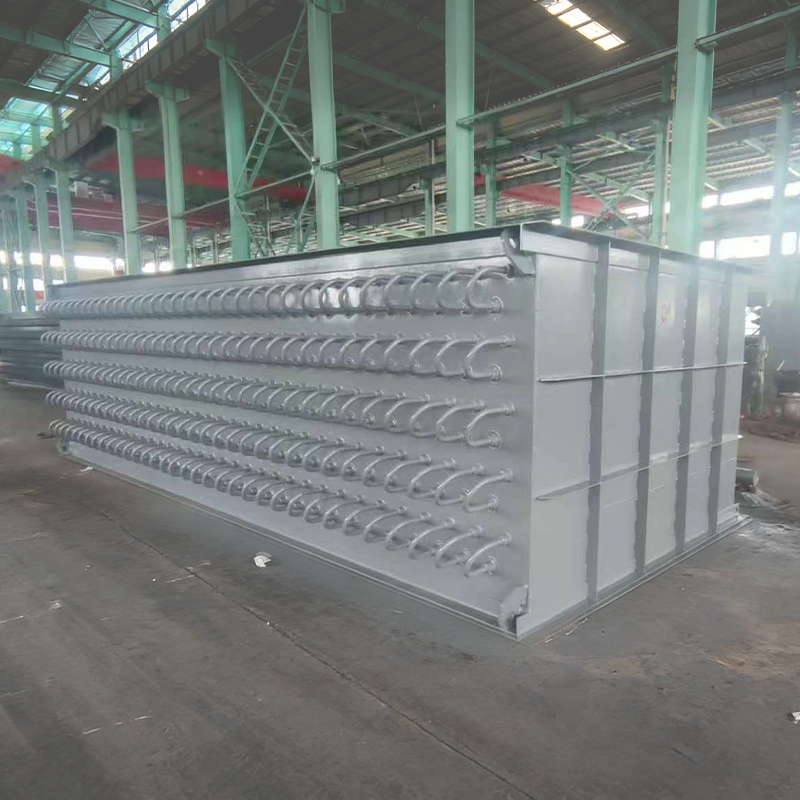
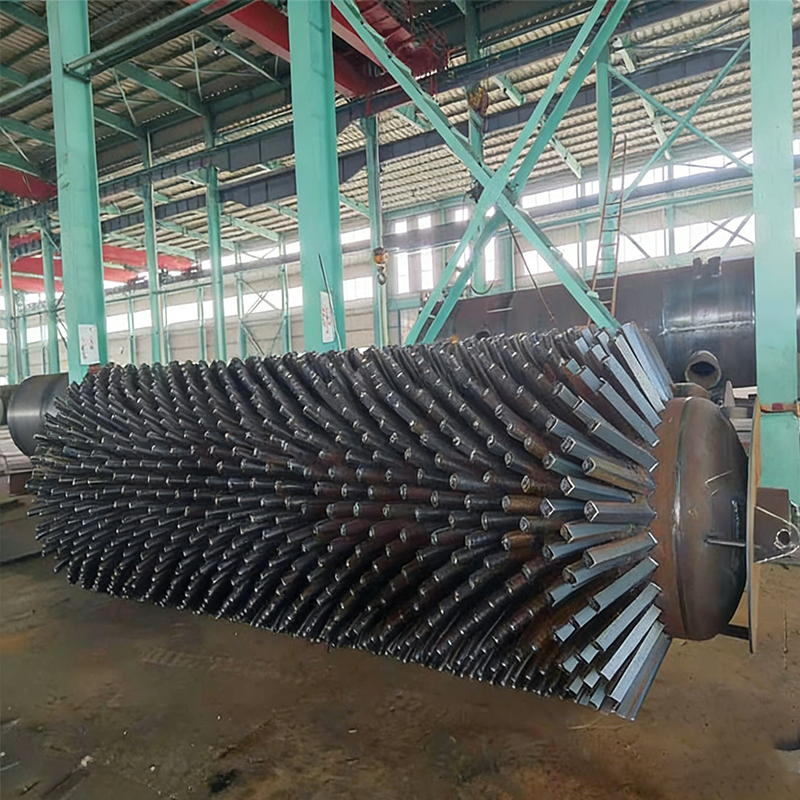
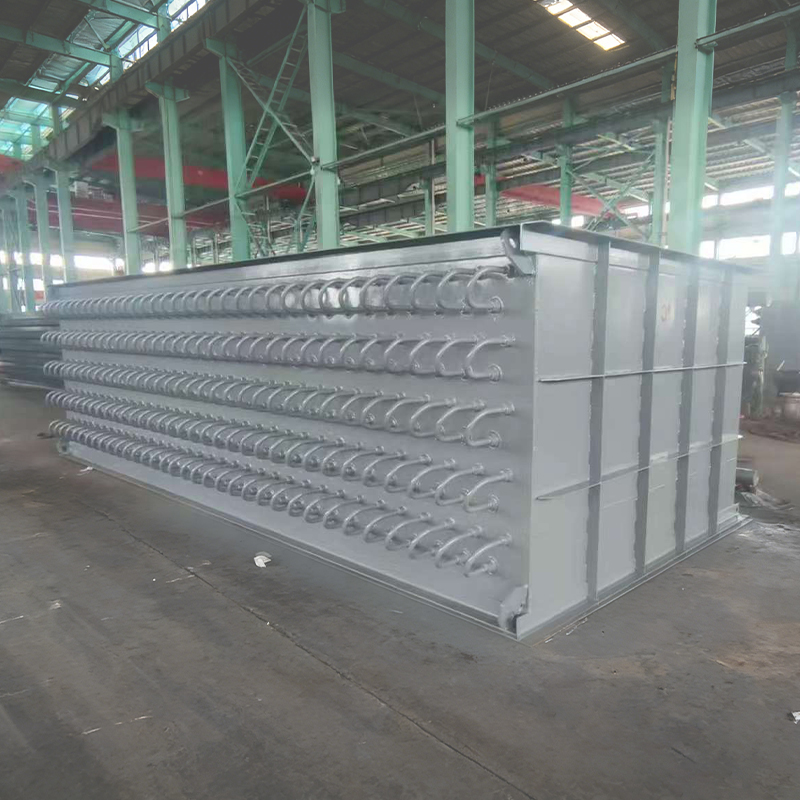
Nickel-based Brazed Economizers are advanced devices that significantly improve the economizer's corrosion resistance, wear resistance, ash accumulation resistance, and heat transfer efficiency through special nickel-based brazing and diffusion coating technologies, making them ideal for use in harsh boiler environments.
Core Advantages: High Efficiency: The fins and base tube are metallurgically bonded through brazing, resulting in extremely low thermal resistance and a heat transfer efficiency 30%-50% higher than traditional products, leading to significant energy savings. Strong Corrosion Resistance: Nickel-based materials perfectly resist acid dew point corrosion from flue gas, extending the lifespan far beyond ordinary carbon steel economizers. Compact Structure: Its extremely high heat transfer efficiency results in a smaller size for the same heat exchange capacity, making it ideal for space-constrained retrofit projects. Reliable Pressure Resistance: High-strength brazed connections withstand high pressure, resist thermal fatigue, and ensure safe and stable operation. Long Lifespan, Maintenance-Free: Combining corrosion resistance and high reliability, it boasts a long design life, requires virtually no maintenance, and has low total lifespan costs.
Application Areas: Power Industry: Widely used in coal-fired power plants and circulating fluidized bed boilers, solving ash accumulation and wear problems in high-dust environments and ensuring long-term efficient boiler operation. Heavy Industry: Ideal for waste heat recovery systems in industrial furnaces and kilns in steel, coking, oil refining, and chemical enterprises, effectively resisting corrosion from complex flue gas components. Energy Saving and Environmental Protection Projects: Particularly suitable for recovering waste heat from low-temperature flue gas; its surface permeation layer effectively resists acid dew point corrosion, significantly improving the overall energy efficiency of the system. Demanding Operating Conditions: Designed for handling high-sulfur fuels, waste, or extreme environments requiring long-term maintenance-free operation, providing exceptional equipment lifespan and reliability.
Message Feedback
Related Products
About
Jiangsu Shineng Chemical Equipment Co., Ltd.
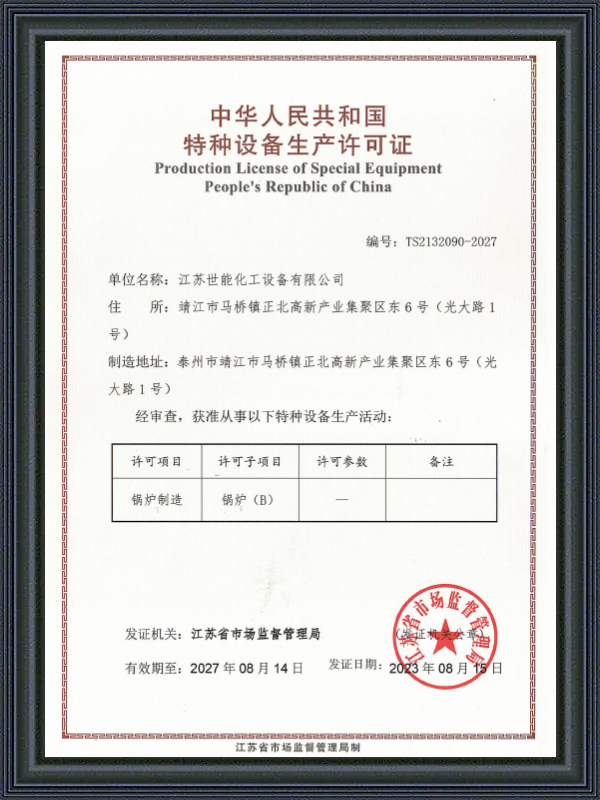
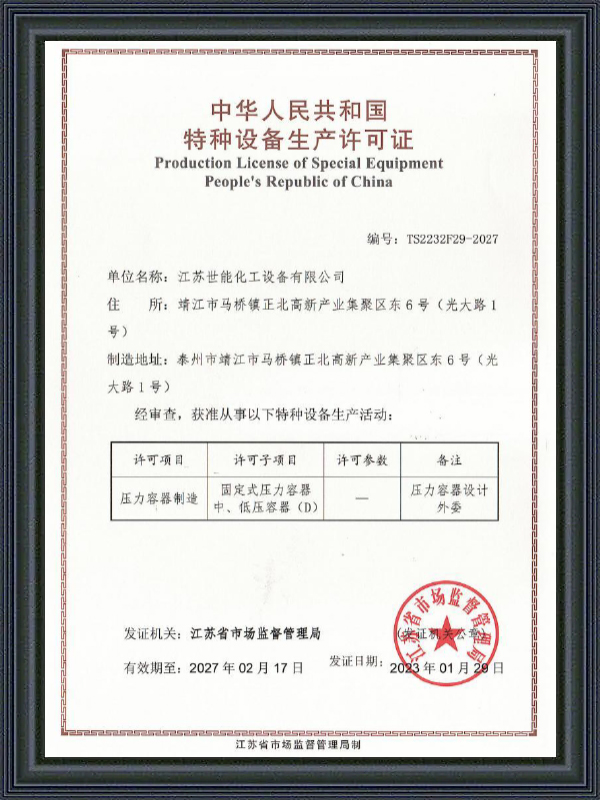
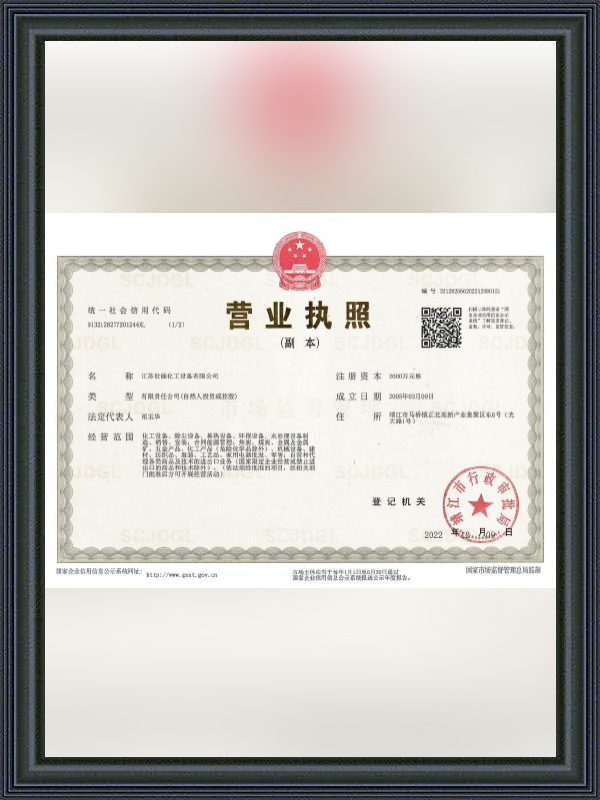
As China nickel-based brazed economizer manufacturer and brazed economizer supplier, Jiangsu Shineng Chemical Equipment Co., Ltd, founded in 2005, the company specializes in the R&D and manufacturing of flue gas waste heat recovery systems and chemical equipment, possessing comprehensive in-house capabilities spanning from heat pipe development and nickel-based brazing to pressure vessel fabrication. Our products are widely used in coal chemical, metallurgy, power generation, and synthetic ammonia industries, and have been exported to overseas markets.
A puddle under the casing of an industrial boiler is rarely just a plumbing problem. On a 60 t/h coke oven flue gas waste heat boiler, water appearing along a casing seam usually points to one of three things: a failed tube-to-tubesheet weld, a thinned economizer tube, or a weeping handhole gasket....
Boiler Safety Relief Valve Leaking: The Short Answer Before the Details
If a boiler safety relief valve is leaking, treat it as a defect on the pressure boundary, not as a housekeeping nuisance. The valve is the last mechanical barrier standing between a pressurised drum and an overpressure event, ...
Why a Boiler PRV Leaks: The Conclusion First
At three in the morning, a warm puddle spreads across the floor under a boiler that was running perfectly the day before. The natural reaction is to assume the valve has failed and order a replacement. That reaction is usually wrong. A boiler PRV leaking...
A Nickel-Based Brazed Economizer is a compact, high-performance boiler economizer that utilizes nickel-based alloy filler metal and high-temperature brazing to bond heat exchange tubes with fins or plates. Unlike conventional welded or mechanically expanded economizers, the brazed joint provides continuous metallurgical bonding, eliminating crevices and reducing thermal resistance. This design is especially suited for challenging flue gas conditions containing sulfur compounds, moisture, or chlorides. According to ASME PTC 4.4 and industry studies, nickel-brazed economizers can achieve heat transfer coefficients 30-45% higher than traditional finned-tube designs, while resisting acid dew point corrosion. Typical applications include coal-fired boilers, waste-to-energy plants, and chemical process heaters where low-temperature corrosion is a major concern.
Figure 1: Relative Heat Transfer Coefficient Comparison
The horizontal bar chart compares relative heat transfer coefficients of different economizer constructions. A bare tube economizer is set as the 100% baseline. Welded fin designs provide a 28% improvement, while a nickel-based brazed economizer achieves a 43% higher heat transfer coefficient due to the continuous metallurgical bond and elimination of air gaps. Advanced optimized brazed-fin configurations can reach up to 52% improvement. This directly translates to smaller footprint and lower flue gas exit temperatures — for a 100 t/h industrial boiler, a nickel-brazed economizer can recover an additional 2.8 MW of waste heat compared to a standard finned design. Consequently, exit flue gas temperature can be reduced to 130-145°C safely without acid condensation risks, boosting overall plant efficiency by 3-5%.
As a specialized China Nickel-based Brazed Economizer and Brazed Economizer Manufacturer, Jiangsu Shineng Chemical Equipment Co., Ltd. utilizes advanced vacuum brazing technology with nickel-based filler metals (BNi-2, BNi-5). The process ensures homogeneous bonding, superior creep strength, and resistance to sulfur dew point corrosion. Their Nickel Economizer series is widely adopted in coal chemical, metallurgy, and power generation.
2. Working Principle and Construction Advantages
The brazed economizer operates by passing flue gas across a matrix of nickel-brazed finned tubes while feedwater flows inside the tubes. The brazed joint creates a uninterrupted thermal path: heat conducts from the fin tip through the brazed fillet into the tube wall, then to the water. This contrasts with mechanical expansion where contact resistance can be as high as 15-20% of total thermal resistance. In nickel-based brazing, the filler metal melts at 980-1040°C and wets both base metal surfaces, forming a dense, void-free layer. According to Heat Transfer Engineering Journal (Vol.42, 2022), this reduces contact resistance to below 3%.
Jiangsu Shineng's manufacturing process includes strict control of brazing atmosphere (vacuum or controlled hydrogen) to prevent oxidation. As a leading Boiler Economizer Supplier and Corrosion Resistant Economizer Supplier, the company offers Nickel Based Brazed Economizer for high-sulfur flue gas service, with proven lifetime exceeding 10 years in coal chemical applications.
3. Performance Advantages and Comparison with Standard Economizers
Nickel-brazed economizers provide measurable improvements in corrosion resistance, heat transfer density, and long-term reliability. The table below quantifies differences across five critical parameters, based on field data from a coal-fired power plant retrofit.
Table: Comparative performance – Standard economizer vs. Nickel-Based Brazed Economizer (operating with high-sulfur flue gas, S content 2.5%)
The column chart highlights the dramatic corrosion resistance improvement. Standard welded economizers suffer an average corrosion rate of 0.28 mm/year in high-sulfur flue gas, leading to tube failure typically within 5-6 years. In contrast, the nickel-brazed joint and base material protection reduce corrosion to 0.07 mm/year — a 75% reduction. This extends service life to over 15 years in the same environment. The superior performance is due to the nickel alloy's ability to form a stable, passive oxide layer that resists sulfuric acid dew point corrosion. Additionally, the absence of crevices eliminates localized pitting. For an industrial boiler economizer operating 8,000 hours annually, this means maintenance intervals can be extended from 18 months to 4 years, drastically lowering lifetime costs.
Figure 3: Performance Radar Chart — Standard vs. Nickel-Brazed Economizer
The radar chart compares five performance dimensions. Standard welded economizers score around 65-70 in heat transfer density and corrosion resistance. In contrast, a nickel-based brazed economizer from Jiangsu Shineng achieves scores above 90 across all metrics, with corrosion resistance reaching 96 due to the nickel braze alloy's inertness. The continuous brazed interface improves mechanical strength by eliminating weld stress risers. Additionally, the smooth brazed fillets reduce particulate fouling, maintaining clean heat transfer surfaces for longer periods. For high-sulfur or high-moisture flue gas streams, this technology is the preferred choice among Economizer Manufacturer solutions. Jiangsu Shineng also provides Custom Boiler Economizer designs tailored to existing boiler configurations, ensuring easy retrofit and maximum energy recovery.
4. Frequently Asked Questions (Q&A)
Q1: What makes nickel-based brazing different from conventional welding in economizers? Nickel-based brazing uses a filler metal that melts and flows via capillary action into the joint gap, creating a uniform metallurgical bond across the entire fin-to-tube interface. Welding only joins discrete points, leaving gaps that promote corrosion and thermal resistance. Brazed joints have contact resistance below 3% versus 15-20% for mechanically expanded or partial-welded fins, resulting in superior heat recovery economizer performance.
Q2: Can a nickel-brazed economizer be used for high-sulfur flue gas (above 3% S)? Yes. The nickel alloy layer provides excellent resistance to sulfuric acid dew point corrosion. Jiangsu Shineng's nickel-based brazed economizers have been operated successfully in flue gas with up to 4.2% sulfur content, maintaining a corrosion rate below 0.1 mm/year. This makes it an ideal Corrosion Resistant Economizer Supplier solution for coal-fired power plants and chemical industries.
Q3: How does the cost compare with standard economizers over the equipment lifetime? While the initial investment for a nickel-brazed economizer is approximately 25-35% higher than a standard welded unit, the total cost of ownership is significantly lower due to extended service life (15+ years vs 6 years) and reduced maintenance. Field data from a 250 MW coal plant shows a 40% lower annualized cost over a 10-year period, thanks to fewer replacements and higher heat recovery rates.
Company introduction: Jiangsu Shineng Chemical Equipment Co., Ltd. As a China flue gas recovery unit manufacturer and waste heat recovery system company, Jiangsu Shineng Chemical Equipment Co., Ltd, founded in 2005, specializes in the R&D and manufacturing of flue gas waste heat recovery systems and chemical equipment, possessing comprehensive in-house capabilities spanning from heat pipe development and nickel-based brazing to pressure vessel fabrication. Our products are widely used in coal chemical, metallurgy, power generation, and synthetic ammonia industries, and have been exported to overseas markets. As a leading Brazed Economizer Manufacturer and Boiler Economizer Manufacturer, Shineng delivers high-performance Nickel Alloy Economizer and Economizer for High Sulfur Flue Gas solutions globally.
References: ASME PTC 4.4-2021 Waste Heat Recovery Boiler Performance Test Code; Heat Transfer Engineering Journal, Vol.43, Issue 5, "Brazed Fin-tube Heat Exchangers for Aggressive Flue Gases" (2022); and China Boiler and Pressure Vessel Safety Standard GB/T 16507-2022.


 English
  русский
 Español