

 English
  русский
 Español
News
Home / News / Industry News / Can Boilers Explode? Causes, Standards, and Prevention Tips for Plants

+86-13961025664
Content
Can boilers explode? Yes, they can. But in the context of an industrial plant, the real question is not just whether it is possible — it is whether the design, materials, and operating procedures in your facility make it likely. When a plant manager, process engineer, or procurement specialist searches for this phrase, they are usually facing one of two scenarios: a safety audit that has uncovered gaps, or a specification decision for a new waste heat recovery boiler. In either case, the answer needs to be precise, not reassuring by rote. Boiler explosions are not random acts of physics. They are the endpoint of a chain of predictable failures: pressure exceeding the design envelope, heat transfer surface losing its cooling capacity, corrosion thinning the pressure boundary, or fuel gas finding an ignition source. Each of those failures can be prevented by design calculations, fabrication quality control, and a disciplined inspection regime.
This article looks at the question from the standpoint of a manufacturer of industrial waste heat boilers, economizers, and heat exchangers. That perspective matters because the explosion risk profile of a waste heat boiler is different from that of a fired package boiler. A waste heat boiler is often subjected to both high-temperature flue gas on the shell side and a water-steam system on the tube side. The boundary between those two systems is where most incidents start. The goal here is to give you a usable, practical understanding of the failure mechanisms, the standards that govern them, and the maintenance routines that keep them from becoming real events.
To answer the question "can boilers explode" in a useful way, you have to separate two distinct physical mechanisms. The first is a pressure-boundary failure, often called a physical explosion. The second is a combustion or fuel-gas explosion, also called a chemical explosion. They share the same outcome — catastrophic release of energy — but they originate from different process conditions and call for different preventive measures.
A physical boiler explosion occurs when the internal pressure of the water-steam system exceeds the strength of the pressure vessel. In a normal operating boiler, the pressure is contained because the water and steam are in thermodynamic equilibrium at a controlled setpoint. The vessel metal is designed to carry that pressure at the corresponding saturation temperature. If the pressure rises above the design limit, or if the wall temperature rises far above the design temperature while the pressure stays within its limits, the metal loses strength and ruptures. The rapid expansion of the stored water and steam can release energy equivalent to a large explosive charge.
The most common physical explosion sequence starts with low water level combined with sustained firing. When the water level drops below the tubes, the heat from the burner or the flue gas can no longer be absorbed by water. Instead, the tube metal heats up rapidly and loses its rupture strength. If the flame is not cut off, the tube can fail, and a large volume of high-temperature water flashes to steam. In a waste heat boiler, the same sequence can happen if the gas-side mass flow continues while the water-side pump trips. The trick is not to assume that the burner always controls the heat input — in a waste heat boiler, the heat source is the upstream process, not a burner.
The second mechanism is a chemical explosion. This occurs when fuel gas — natural gas, coke oven gas, or any combustible vapor — leaks into an enclosed space, mixes with air to reach the flammable range, and then meets an ignition source. In a boiler, this can happen in the combustion chamber, the flue ductwork, or the open air near a leaking flange. The most dangerous condition is a pre-purge failure: a burner control system that allows fuel to flow before the combustion chamber is adequately purged with air.
Chemical explosions are also possible on the water side in rare instances. If certain chemical cleaning agents or decomposition products generate hydrogen, and that hydrogen is trapped in a closed volume with oxygen, it can ignite. In practice, however, the gas-side explosion is far more common in industrial boiler incidents.
Boiler explosion statistics from different reference sources, insurance carriers, and plant audits are not perfectly aligned, but they converge on a limited set of leading causes. It is worth stating clearly that the proportions below are a conceptual synthesis of typical industrial failure modes, not a precise statistical record of any single database. What matters is the ranking and the engineering interpretation.
Overpressure protection failure is the single largest contributor. This means that the safety valve or relief device did not open when it should have, or the low-water cutoff and flame interlock did not shut down the heat source. The cause may be a blocked pressure tap, a safety valve set too high, a manual bypass left open, or an interlock that was deliberately overridden. In waste heat recovery systems, an equally dangerous situation is a bypass damper that remains partially open, allowing hot gas to continue entering the boiler when there is no water flow.
Water-side fouling ranks second. This is especially relevant for economizers and waste heat boilers in high-dust flue gas conditions. Scale deposits on the water side act as an insulating layer, preventing heat transfer from the metal to the water. The metal temperature climbs, and in extreme cases the tube ballooned and bursts. In a standard fired boiler, a 1 mm layer of calcium carbonate scale can raise the tube wall temperature by several hundred degrees. In a waste heat boiler, the same could happen when the feed water chemistry is poorly controlled.
Fuel gas leakage is the third category. In coking, chemical, and metallurgical plants, the fuel gas is often coke oven gas or blast furnace gas. These are not natural gas; they have different densities and compositions, and some have high hydrogen content, which makes them more prone to flashback. If the gas train is not purged correctly, or if a control valve leaks past its seat, an explosive mixture can form. Gas detection and a properly designed pre-purge sequence are the main defenses.
Corrosion and fatigue are the "slow burners" among the top causes. These mechanisms do not produce a sudden failure on day one. Instead, they reduce the pressure boundary thickness or initiate cracks that propagate over years. A waste heat boiler operating with flue gas that is below the sulfuric acid dew point can experience severe low-temperature corrosion on the gas side. The acid condenses on the tube surface, and the metal is chemically eroded. Stress corrosion cracking can develop at the tube-to-header connections, especially when the water chemistry is not maintained and chloride levels are elevated.
The remaining category, manufacturing defects, is the smallest but also the most preventable. Defective welds, poor heat treatment, or wrongly specified material grades can all lead to a premature failure. That is precisely why codes such as ASME Section I and Section VIII, as well as domestic pressure vessel licensing, require documented weld procedures, qualified welders, and non-destructive examination of critical joints. When you purchase from a manufacturer with proper certifications, this risk factor is largely controlled at the source.
Not all boilers are equally vulnerable, and the question "can boilers explode" has a different answer depending on the boiler architecture. Fire tube boilers, water tube boilers, and waste heat boilers each have distinct failure modes. For a plant considering a new unit, understanding that distinction is essential for informed specification.
| Boiler type | Water volume | Heat source | Primary explosion risk | Typical application |
|---|---|---|---|---|
| Fire tube boiler | Large | Burner / furnace | Accumulation of fuel gas, low water level | Process steam for smaller plants |
| Water tube boiler | Smaller | Burner / furnace | Tube failure from scale, overpressure | Power generation and large process industries |
| Waste heat boiler | Smaller | Upstream flue gas | Loss of water flow during bypass, corrosion, gas-side leakage | Coal chemical, metallurgy, power |
| Electric boiler | Intermediate | Electric heating elements | Overpressure from expansion, no fuel gas source | Clean and auxiliary steam |
Fire tube boilers are inherently compact and have a high steam volume, which classically triggered the idea that boiler failure is equivalent to "a bomb." A large water volume means that a sudden rupture releases a huge amount of stored energy. The risk is mitigated by maintaining a carefully controlled water level and by ensuring no fuel build-up. In a fire tube boiler, the flame is inside the tube, so the water absorbs the heat from the outside surface. If the water level is too low, the crown of the furnace is directly exposed and can fail very quickly.
Water tube boilers use water inside the tubes, with combustion gas on the outside. The water volume in the vessel is much smaller, typically just enough to separate steam from water. The explosion risk is more localized to a tube burst, though a localized burst can still trigger a second, more serious event. In water tube boilers, it is crucial to monitor the ratio of water flow to heat input. The critical failure point is not the overall vessel, but the circulation regime. If circulation is lost, the tubes overheat and the pressure boundary fails.
Waste heat boilers have their own distinctive risk profile. They do not normally have a burner, so in the strict sense, a gas-side explosion from a burner fuel-air mixture is not the typical event. However, in many plants, the waste heat boiler is connected to a combustion shaft or a fryer, and unburned gas from the upstream process can be carried into the boiler. In cupola or steelmaking fume systems, CO can be present in the off-gas. A leak or a restart without proper purging can allow CO to accumulate. The most common waste heat boiler accident is still a tube leak caused by thermal shock, erosion, or corrosion. Since these boilers are often located in high-temperature, dusty flue gas streams, the material condition must be assessed at frequent intervals.
Waste heat recovery units also include economizers, air preheaters, and other heat exchange equipment. An economizer, for example, recovers heat from the flue gas to preheat boiler feed water. Because the water is below saturation temperature, the tube walls are subject to a wider temperature range, which can lead to thermal fatigue. A nickel-based brazed economizer is specifically engineered to withstand the corrosive and thermal cycling conditions. The brazed joint structure also reduces the number of welded joints, which are often the failure points in a traditional economizer.
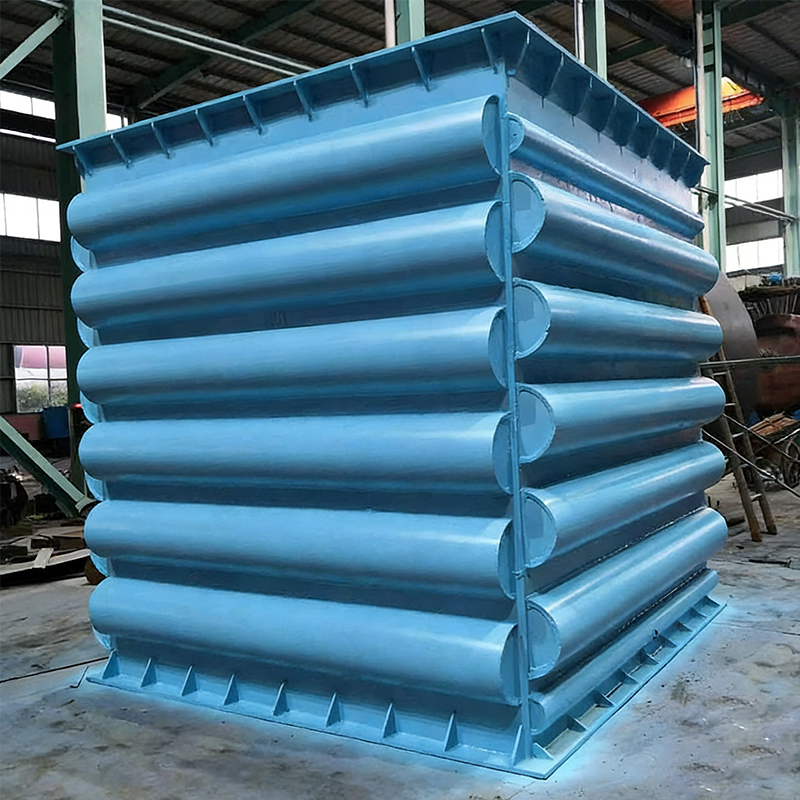 Coke Oven Flue Gas Waste Heat Boiler for Medium-Low Temperature RecoveryThis boiler recovers waste heat from 260-300°C coke oven flue gas, reducing it to 140-160°C while generating steam. Its economizer and evaporator sections with H-finned tubes achieve over 85% efficiency, making it a key solution for coking plants seeking energy savings and emission reduction.View Product →
If you are considering a waste heat boiler for a coke oven flue gas or a sintering circular cooler system, the most critical selection issue is matching the boiler design to the actual flue gas composition and temperature profile. A boiler that is too small will run at excessive flue gas velocities and cause erosion; a boiler that is oversized will operate at too low a gas temperature and promote condensation. That is why a qualified manufacturer must bring a design calculation based on the specific project, and not a general-purpose engineered product.
The question "can boilers explode" is usually asked in a context where codes and standards are already in place. It is the enforcement of those standards, through design and fabrication quality control, that separates a safe boiler from a hazardous one. Globally, the ASME Boiler and Pressure Vessel Code is the most widely recognized framework for design and construction. A manufacturer holding the ASME certificate, combined with a domestic Type III pressure vessel license, demonstrates that the design calculations, materials selection, and fabrication procedures are all subject to a documented quality system.
The design phase is the first defense. A boiler is designed with a factor of safety relative to the maximum allowable stress. The design pressure is set above the maximum operating pressure, and the structural strength of every component is checked against both the internal pressure and the external loads. At the same time, the heat transfer surface area is determined from the expected flue gas flow and temperature. The design must account for fouling factors: an additional margin is included so that even when scale develops, the metal temperature remains within safe limits.
Safety equipment is designed into the system, not added afterward. The safety valve on a boiler is sized for the maximum generation rate of the unit. It must be set to a pressure that is below the design pressure. In addition, the low-water cutoff is connected to a burner management system that shuts off the heat source when the water level goes below the minimum safe level. In a waste heat boiler, the safety interlock should also monitor the bypass damper position. When the gas flow is diverted away from the boiler, the water flow can likewise be reduced, but that sequence must be automated rather than manual.
Fabrication quality control is equally important. The pressure boundary of a boiler is formed by welded tube-to-tube, tube-to-header, and shell seams. These joints must be welded by procedures qualified for the specific material grade and thickness. Each weld must be inspected, either by radiography, ultrasonic examination, or another accepted NDT method. After the welding is complete, the entire vessel is hydrostatically tested at a pressure that is typically 1.5 times the design pressure. That test provides a direct verification that the entire pressure boundary is leak-tight and structurally sound.
For a waste heat recovery system, the pressure boundary is one part, but the heat exchange surface itself also requires quality control. In nickel-based brazed heat exchanger elements, the entire metal surface is coated with a nickel-based filler metal in a vacuum brazing furnace. This creates a uniform, corrosion-resistant layer that is far more consistent than manual welding. When a plant is dealing with high-chloride or sulfuric acid contamination in the flue gas, the brazed surface resists corrosion more effectively, which prolongs the life of the equipment and reduces the chance of a tube leak.
The best defense in a fuel gas system is a reliable burner management system. The flame safety controller must sequence the purge, the ignition, and the fuel flow so that the fuel cannot enter an un-purged chamber. In addition, the gas train needs leak-proof valves. A common maintenance item is the valve seat, which can fail due to wear from thermal cycling or foreign material. Tightness checks should be scheduled at the same frequency as the burner management testing.
In China, the domestic pressure vessel license covers a comparable set of requirements. The manufacturer must implement a quality system that covers design, material procurement, welding, inspection, and documentation. This is precisely the kind of capability that a plant should verify during a supplier audit. A manufacturer that can show a robust quality management system is not merely looking good on paper; it is demonstrating that the boiler has gone through a process designed to eliminate manufacturing defects at the source.
For those who are planning a waste heat recovery system, there is a direct relationship between the quality of the design and the long-term safety of the plant. An experienced manufacturer will calculate the corrosion margin, the thermal expansion clearance, and the dust loading so that the boiler operates without excessive fouling or erosion. This is not a "nice to have"; it is a safety consideration, because fouling and erosion are both significant contributors to the failure modes described above.
Waste heat boilers are used to recover heat from industrial flue gas. Depending on the process, the flue gas can be from a coke oven, a sintering circular cooler, a rotary hearth furnace, or an oxygen-blown converter. The selection of the boiler for each of these scenarios is driven by very different technical considerations. The starting point for any selection is to define the flue gas conditions, then match the boiler design to match those conditions.
| Coke oven flue gas waste heat boiler | Sintering circular cooler waste heat boiler |
|---|---|
| Flue gas temperature: high, often unstable | Flue gas temperature: moderate but harge flow |
| Dust content: moderate, sticky tar and fine dust | Dust content: high, abrasive and irregular particle size |
| Corrosion risk: sulfate and sulfide deposits | Corrosion risk: low temperature corrosion at startup and shutdown |
| Key selection point: tube arrangement with online cleaning | Key selection point: erosion-resistant design and dust hoppers |
When selecting a waste heat boiler, there are four core decision points that a plant engineer should understand. The first is the flue gas volume versus the heat transfer surface area. If the volume is insufficient, the gas velocity through the boiler will increase accordingly, which causes erosion. If the gas flow is not steady, a bypass valve must be integrated to regulate and prevent thermal shock. The second decision point is the water quality. Scale formation on the water side reduces heat transfer and can cause overheating of the tubes. If the plant cannot guarantee consistent feed water quality, it must add more downtime for cleaning, or choose a tube surface that resists scale.
The third decision point is the dust handling strategy. In many industrial flue gas streams, dust is abrasive and can erode the leading edge of the tubes. The design can include soot blowers or an online ash cleaning system. The fourth point is the material selection for the gas-side surface. In a case where the flue gas has a high moisture content and a low temperature during startup, sulfuric acid condensation can occur. For such applications, a nickel-based brazed surface can significantly reduce the corrosion rate, especially on the economizer.
When a plant is considering a flue gas heat recovery system, it is also necessary to evaluate the pressure loss on the gas side. The boiler will add a pressure drop to the existing draft system. If the back pressure is too high, it will affect the upstream furnace operation. The calculation of this pressure drop must take into account the dust accumulation, which grows over time. Therefore, a good design will leave enough margin for the boiler to be operated at design load even with some fouling.
A typical application in a coke oven plant is a waste heat boiler installed on the flue gas after the coke oven. The flue gas temperature is high, and the dust content is often lower than in a sintering plant, but tar and volatile organic compounds can cause sticky deposits that are difficult to remove with conventional cleaning. An online ash cleaning system, such as a steam soot blower, is a common solution. The system can be operated while the boiler is running, which reduces the downtime and prevents the heat transfer surface from becoming blocked. The result is a more stable steam output and a lower risk of localized overheating.
In a sintering plant, the flue gas from the circular cooler contains lumpy and abrasive dust. The dust can be very hard and can erode the leading edge of the heating tubes. The design must be robust enough to handle a gas stream with high particulate loading. As a result, the gas channels in the boiler typically have larger clearances, and the tubes are positioned in a way that minimizes direct impingement by the dust stream. A waste heat boiler recovery system in a metallurgy plant saves fuel consumption and directly improves the system's economic performance. This is a point of reference for engineers who want to understand the specific advantages of such a retrofit.
Air preheaters are also commonly used in conjunction with a waste heat boiler. An air preheater recovers heat from the flue gas to preheat the combustion air. This improves the flame characteristics, reduces the fuel consumption, and lowers the flue gas temperature. The air preheater can be a separate component or can be integrated into the waste heat boiler. To ensure the long service life of the air preheater, the design must consider the same factors as the waste heat boiler: dust, corrosion, and thermal expansion.
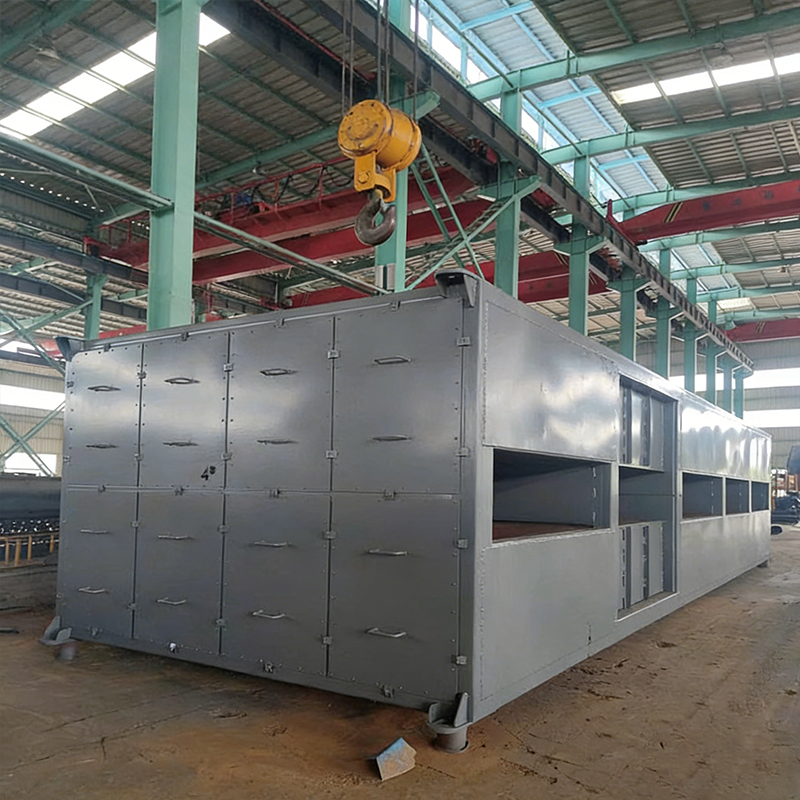 Air Preheater for Boiler Flue Gas Heat RecoveryThis air preheater recovers heat from flue gas to preheat combustion air, improving boiler efficiency and combustion stability. It helps mitigate low-temperature corrosion, with options for tubular or rotary designs, crucial for reducing fuel consumption in boiler systems.View Product →
If you are in the process of designing a waste heat recovery project, one of the most practical things you can do is to create a selection matrix that compares the available products against your actual flue gas data. For an OEM manufacturer, this is a routine calculation. For an end user, going through this process helps avoid a common mistake: choosing a product that is rated for clean gas, and using it in an environment where the dust or acid content is high. That mismatch leads to premature failure, frequent shutdowns, and in the worst case, the kind of tube leak that can trigger a safety event.
Boiler explosion prevention is not complete at the factory door. Once the boiler is in the plant, the maintenance and inspection program becomes the active layer of protection. A boiler that is properly designed may still be dangerous if the safety devices are not tested, the water chemistry is not maintained, or the heat exchange surface is allowed to deteriorate over time. The question "can boilers explode" must therefore be accompanied by another question: "is my inspection schedule covering the actual risk points?"
Water chemistry is the first pillar of safe operation. The American Society of Mechanical Engineers and other organizations have published guidelines for boiler feed water quality. The pH should be maintained in a controlled range, typically between 8.5 and 10.5, depending on the boiler type. The dissolved oxygen must be removed by deaerator equipment. The residual hardness should be low enough to prevent scale formation, and the conductivity should be monitored to limit the build-up of dissolved solids. In a waste heat boiler, the same standards apply, but the operator must also account for the variable heat input from the flue gas stream. When the upstream process is running at high load, the heat input increases, and the boiler must have the ability to handle it without bypass.
The safety valve is a critical protection device that must be tested on a routine basis. The standard recommendation is to manually lift the safety valve at least once per week to verify that it is not stuck. Its set pressure should be re-verified as part of the annual inspection. A safety valve that is blocked by scale or debris is a hidden failure. The plant engineer should also check the pressure tap lines to ensure they are not clogged. In a waste heat recovery system, the pressure taps are often in high-dust areas, so they may need more frequent cleaning than in a conventional packaging boiler.
The low-water cutoff and the burner management system should be tested at the same frequency as the safety valve. The controls must be able to shut off the heat source in the event of a low-water level. In a waste heat boiler, this translates to shutting off the upstream gas flow or closing the bypass damper. The interlock logic must be tested with a simulated low-level condition, which demonstrates that the control system is not merely a dead component on the panel.
Inspection of the pressure boundary is divided into external and internal inspection. An external inspection is normally scheduled once a year. The integral parts of the boiler, including the shell, headers, and pipe connections, are checked for signs of deformation, corrosion, or leakage. The internal inspection is normally scheduled every two to three years, depending on the boiler class and the operating history. During the internal inspection, the water-side surfaces are examined for scale build-up, pitting corrosion, or cracking at the tube joints. If any such signs are found, the root cause must be identified before the boiler is put back into service. In a waste heat boiler, the gas side of the tubes and the dust hoppers should also be inspected. A thick layer of accumulated ash is not just an operational problem; it can also form a thermal barrier that contributes to overheating of the tube metal.
Heat exchange surfaces in a waste heat boiler are subject to erosion and corrosion. An economizer in a high-dust flue gas stream may show a wall thickness reduction that is not visible from the outside. A thickness measurement on the representative tube locations should be part of the scheduled inspection plan. If the thickness has decreased below the design minimum, the tube must be replaced or a more corrosion-resistant material must be used. This is precisely the situation where a nickel-based brazed component can provide a longer service life, as the brazed layer provides a uniform barrier against corrosive flue gas.
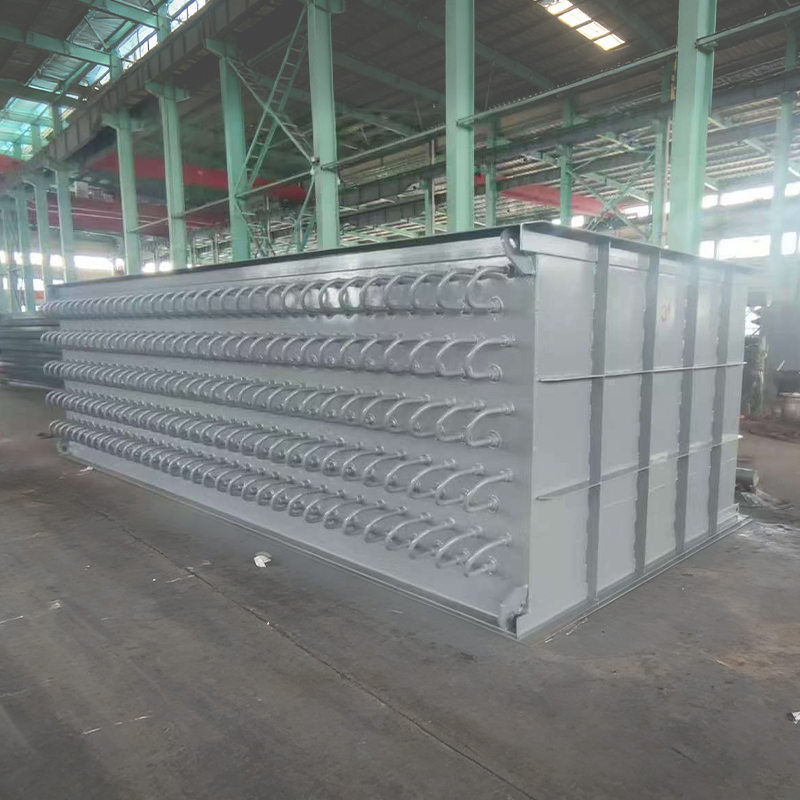 Nickel-Based Brazed Economizer for High-Dust and Corrosive EnvironmentsThis economizer uses nickel-based brazing to metallurgically bond fins, offering 30-50% higher heat transfer efficiency and strong resistance to dew point corrosion. Ideal for high-dust flue gas streams, it extends service life and minimizes maintenance in industrial waste heat recovery systems.View Product →
Operation and logging are also part of the preventive program. The boiler operator should record the steam pressure, water level, flue gas temperature, and water flow at periodic intervals, usually once per shift. Deviations are significant. If the flue gas temperature rises while the water flow remains constant, this may indicate a fouling condition on the gas side or a low water level inside the tubes. If the water flow drops while the boiler is still generating steam, the plant is at risk of an explosive event. A proper log is not bureaucracy; it is a data source that helps identify a small problem before it becomes a large one.
Finally, the maintenance program should include a documented procedure for a boiler that has been shut down for an extended period. Cold shutdown can lead to water-side corrosion because oxygen can enter the components. The boiler should be stored in a dry condition, with either an inert gas blanket or a dried air system. The water-side protection involves either keeping the boiler completely filled with treated water, or draining it and applying a corrosion inhibitor. In a waste heat boiler, the gas side also needs attention: ash can absorb moisture from the ambient air, creating a corrosive paste under the tubes. Cleaning the gas side, and providing a dehumidified purge, is a recommended step upon restart.
Here are the most commonly asked questions from plant engineers, maintenance supervisors, and procurement teams when they investigate boiler explosion risk.
In most industrial incidents, there is a warning sequence, even if it is short. For a physical explosion, the warning signs are typically low water level, high flue gas temperature, or a rise in pressure beyond the setpoint. For a chemical explosion, the warning is a fuel gas leak that is detected by an odorizer or a gas detector. The term "without warning" applies mainly to a sudden tube rupture that occurs due to a pre-existing crack or extreme material fatigue. That is why periodic thickness measurement and crack inspection are so important. They catch the pre-incident condition long before it reaches a critical stage.
Overpressure protection failure is the most frequently mentioned cause in a generalized analysis. In many cases, the safety valve is set correctly, but the pressure tap line gets blocked, or the low-water cutoff is disabled by a previous operator to avoid nuisance trips. A close second is water-side fouling and the resulting overheating of the tube metal. Both causes are directly related to the way the boiler is maintained and operated, which means a committed inspection routine is the most effective countermeasure.
As a general rule, the external inspection is carried out annually. The internal inspection is carried out every two to three years, depending on the boiler type, water chemistry, and service history. For a waste heat boiler, the gas side inspection should also be performed during the same internal inspection, and it should include thickness measurements. Some companies prefer to combine the internal inspection with the annual shutdown of the plant. This reduces the lost production time and provides a consistent data stream for the performance trend.
In terms of fuel-gas explosion risk, waste heat boilers are generally safer because they are not equipped with a burner. In terms of thermal shock and corrosion risk, however, they can be more demanding. The heat input is determined by an upstream process that the boiler itself cannot control. If the process flue gas flow is suddenly interrupted or if the water pump fails, the boiler faces a rapid temperature change. The right protection strategy is the interlock between the upstream process and the boiler water system, plus an adequate low-water cutoff.
Yes, if the safety valve is not the only protection layer. A safety valve protects against overpressure, but it does not protect against tube overheating caused by water starvation or scale. When the tube metal reaches its creep limit, the tube can rupture even though the pressure is below the setpoint of the safety valve. The correct combination of protection layers is a safety valve, low water cutoff, burner management system, and an inspection routine for the water chemistry. All four must be in place for the boiler to be operated safely.
The key decision criteria are engineering capability, a valid ASME certificate, a domestic Type III pressure vessel manufacturing license, and a proven track record in the user's specific industry, such as coal chemical, metallurgy, or ammonia. An established manufacturer will present its design calculations, material certifications, and inspection records. Buying from an manufacturer with a qualified fabrication facility is actually a long-term safety decision, because the boiler is designed and tested to the specific code requirements before being delivered to the plant.
If you are responsible for boiler safety in a coal chemical, power, metallurgy, or ammonia plant, the first thing you should do is not to check the boiler itself — it is to check the engineering pedigree behind it. The reason is simple: the explosion risk of a boiler is determined by the quality of the design calculations, the material selection, and the weld integrity. A manufacturer that holds ASME boiler and pressure vessel certification and a domestic Type III pressure vessel license has a documented quality management system that spans these considerations from start to finish.
As a waste heat boiler and heat exchange equipment manufacturer, Jiangsu Shineng Chemical Equipment Co., Ltd. has been designing and manufacturing industrial heat recovery systems since 2005. The company's product range includes waste heat boilers, heat pipe economizers, air preheaters, cyclone dust collectors, shell-and-tube heat exchangers, and tower equipment. These products are used in coal chemical, metallurgy, power, and ammonia plants, where the flue gas conditions are generally high-temperature, high-dust, and high-corrosion. The company is equipped with an imported second-generation nickel-based brazing furnace, high-frequency fin winding machines, and a heat pipe production line with an annual capacity of two million units.
When you specify a new waste heat boiler or a heat recovery system, the safest approach is to submit your flue gas data to an experienced engineering team. The team should calculate the flue gas properties, including the temperature range, dust particle size, sulfur content, and the acid dew point. Then they should propose a heat transfer design with a sufficient safety margin and confirm the equipment layout with the plant's process conditions. This is precisely the kind of design process that prevents the risk of overheating, corrosion, and thermal shock that were highlighted throughout this article. A safety valve and an interlock system will protect the boiler from operational errors, but the boiler design itself is what determines whether it can operate for five years or twenty years without a tube leak.
For a plant that is planning a full heat recovery system, it is common to choose a single manufacturer that can provide the boiler, economizer, air preheater, and dust collector as a complete integrated package. This reduces the interface management issues and ensures that the overall pressure drop, temperature profile, and load control are balanced. A manufacturer that can provide system-level design and commissioning is also in a better position to verify the safety of the complete system. When a project is split between multiple suppliers, the responsibility for the interface between the boiler and the downstream equipment is often unclear, and that unclarity can create a safety gap.
The process of qualifying a manufacturer should include a factory audit. During the audit, you can verify the welding procedures, the NDT reports, the test records, and the training of the welding personnel. You can also inspect the production line to confirm that the manufacturer can hold the delivery schedule. A quality-first supplier will have no difficulty opening these records for review. As the company is committed to quality and safety, it is important to select a supplier that values these practices.
The following resources are recommended for readers who want to learn more about waste heat boilers and heat exchange equipment used in industrial flue gas recovery systems.
Air Preheater for Boiler Flue Gas Heat RecoveryThis air preheater recovers heat from flue gas to preheat combustion air, improving boiler efficiency and combustion stability. It helps mitigate low-temperature corrosion, with options for tubular or rotary designs, crucial for reducing fuel consumption in boiler systems.View Product → — Recovers heat from flue gas to preheat combustion air, improving fuel efficiency and lowering flue gas temperature.Coke Oven Flue Gas Waste Heat Boiler for Medium-Low Temperature RecoveryThis boiler recovers waste heat from 260-300°C coke oven flue gas, reducing it to 140-160°C while generating steam. Its economizer and evaporator sections with H-finned tubes achieve over 85% efficiency, making it a key solution for coking plants seeking energy savings and emission reduction.View Product → — Designed to recover heat from coke oven flue gas with stable output and online cleaning capability.Nickel-Based Brazed Economizer for High-Dust and Corrosive EnvironmentsThis economizer uses nickel-based brazing to metallurgically bond fins, offering 30-50% higher heat transfer efficiency and strong resistance to dew point corrosion. Ideal for high-dust flue gas streams, it extends service life and minimizes maintenance in industrial waste heat recovery systems.View Product → — A corrosion-resistant economizer for high-moisture and high-acid flue gas environments.For plant engineers who need a complete solution for high-temperature gas waste heat recovery, a combined system that includes a waste heat boiler, an economizer, and a dust collector is a practical answer. The boiler recovers the sensible heat, the economizer improves the feed water temperature, and the dust collector protects the heat exchange surface from abrasive particles. This system-level approach not only improves the overall energy efficiency but also extends the service life of the equipment, which is exactly the kind of maintenance-driven safety that prevents the failure modes described in this article.
If you have any questions, please fill out the contact form at the bottom of the page and contact us.
We will help you move towards success.

Maqiao North High tech Industrial Agglomeration Zone, Jingjiang City, Taizhou City, Jiangsu Province

+86-18752676699 / +86-13961025664
 Previous
