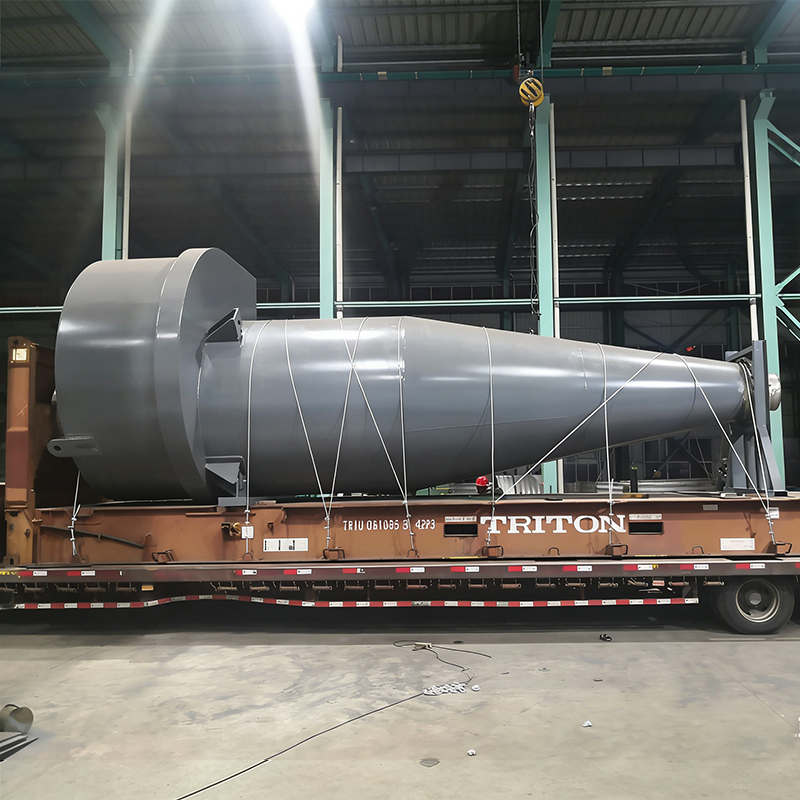
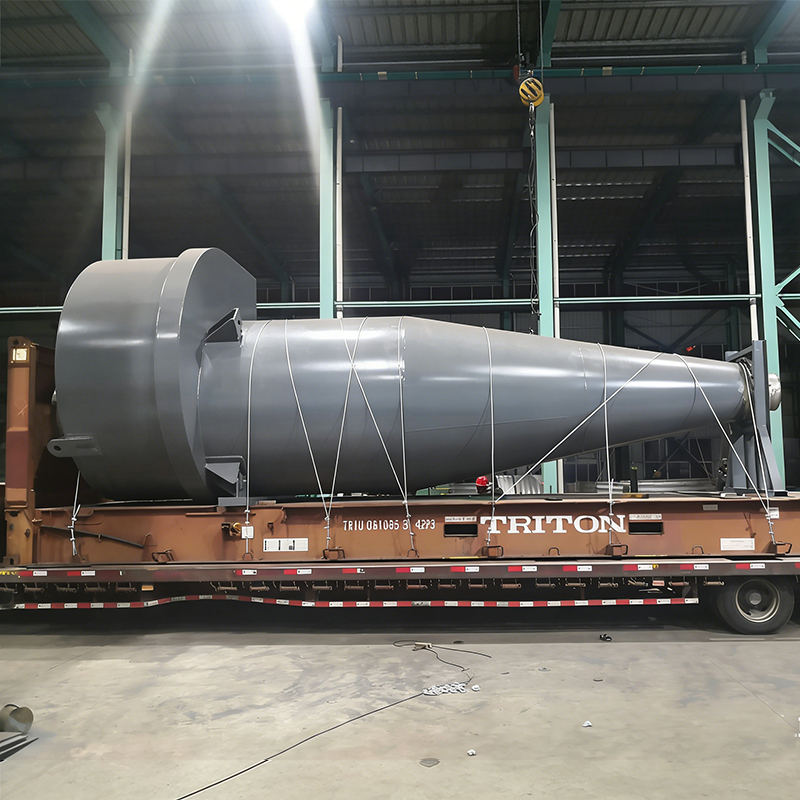
The Cyclone Dust Collector is a mechanical dust collection device that utilizes centrifugal force for gas-solid separation. When a dust-laden airflow enters the device tangentially at a speed of 15-25 m/s, it rotates, causing dust particles with a density greater than the gas to be thrown against the wall under centrifugal force and fall into the bottom hopper, thus separating the dust from the airflow. Compared to baghouse dust collectors and cartridge dust collectors, which rely on filter media for interception, the Cyclone Dust Collector is primarily designed for pre-treatment of dust with larger particle sizes (typically capturing dust particles larger than 5μm) or higher concentrations. Its simpler structure eliminates the need for frequent filter media replacements, resulting in significant advantages in initial investment and operating/maintenance costs. This equipment performs stably when handling high-temperature, high-load dust, with a dust removal efficiency generally between 80% and 98% and a resistance loss of approximately 580 to 1960 Pascals. It is commonly used in high-concentration dust pre-removal and material recovery processes in industries such as building materials, chemicals, and metallurgy. Cyclone dust collectors have no moving parts and can be made of materials such as carbon steel or stainless steel, making them durable and suitable for a wide range of operating conditions. However, due to their limited efficiency in capturing fine dust, they are often used in series with other high-efficiency dust collectors to improve the overall purification effect.
Core Features Structural Features: Simple structure, typically consisting of an inlet pipe, an outlet pipe, a cylindrical body, a conical body, and a dust hopper. There are no moving parts internally, and its operation does not depend on filter media. Performance Features: Classified as a medium-efficiency dust collector, its dust removal efficiency for dust particles larger than 5μm is typically between 70% and 98%, especially suitable for capturing dry, non-fibrous particulate dust. Its pressure loss is generally controlled between 500 and 2000 Pascals. Materials and Durability: Can be manufactured using materials such as carbon steel and stainless steel, capable of withstanding high-temperature (some models up to 1000℃) and high-pressure operating conditions.
Main Applications: Commonly used as a pretreatment device to capture high concentrations of large-particle dust, effectively reducing the load on subsequent high-efficiency dust removal equipment. Also suitable for material recovery and other scenarios. Main Application Areas: Heavy Industrial Dust Pretreatment: Used for pre-dust removal of high-temperature flue gas in industries such as steel, cement, and power, such as the separation of coarse particles in boiler flues and rotary kiln outlets. Material Recovery and Pneumatic Conveying: Used in chemical, food, and pharmaceutical production to recover valuable raw materials, achieving dry collection when integrated with pneumatic conveying systems. Woodworking and Machining: Treats large-particle dust generated from wood and metal grinding, such as a pre-separator in a central dust collection system in woodworking workshops. Explosion-proof and Special Environments: Features an anti-static design for explosive dusts (such as aluminum powder and coal powder), meeting cleanroom cleanliness requirements.
Message Feedback
Related Products
About
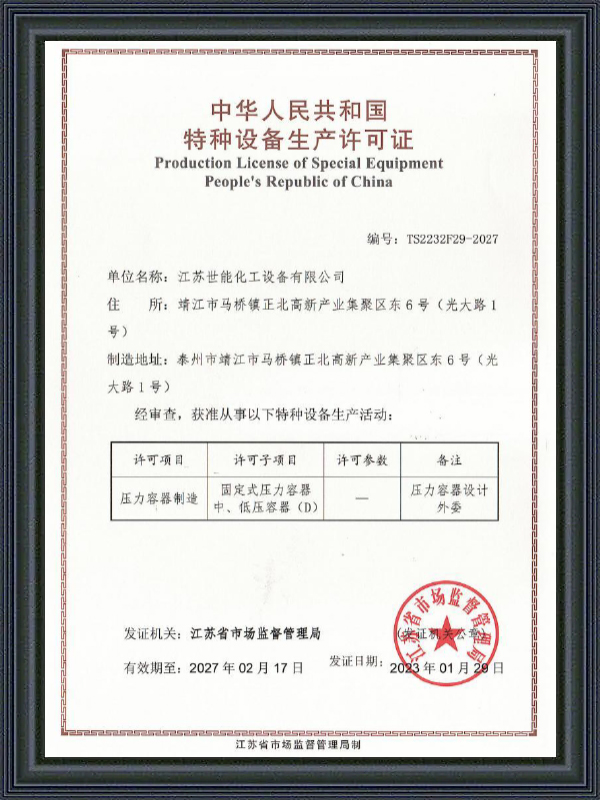
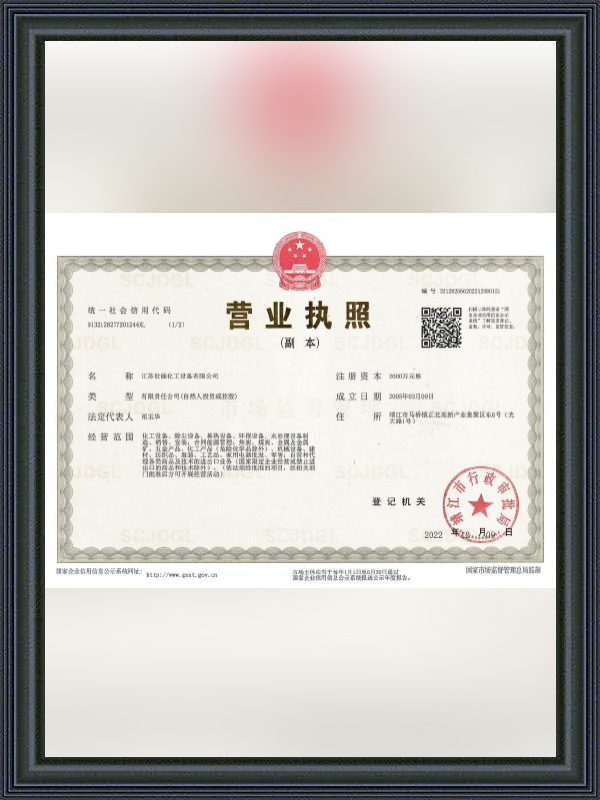
Jiangsu Shineng Chemical Equipment Co., Ltd.
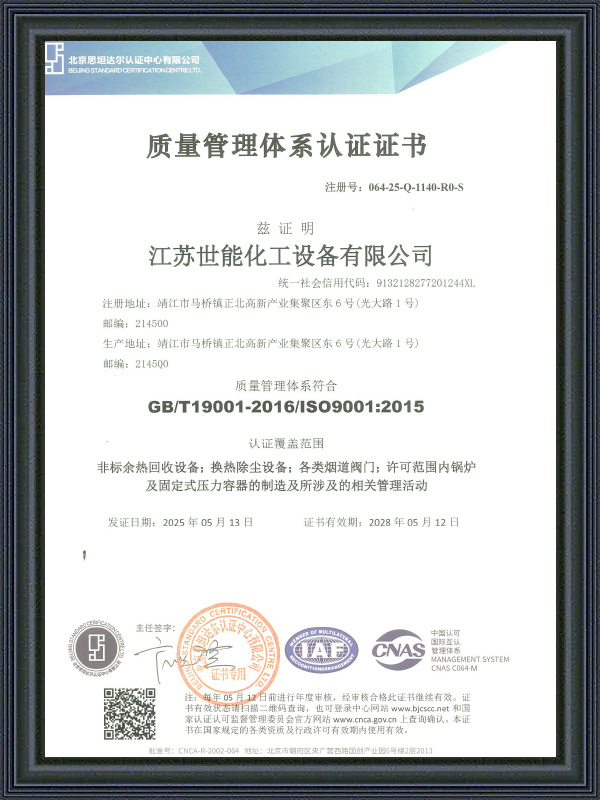
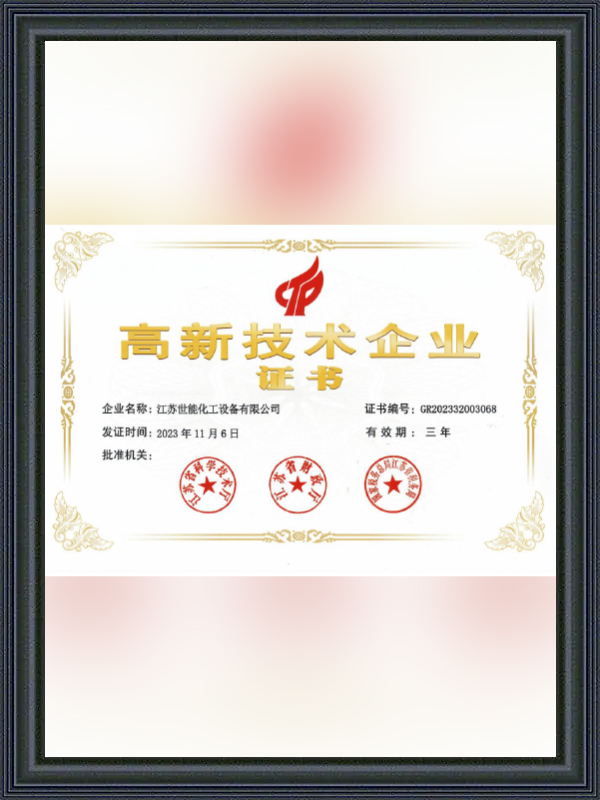
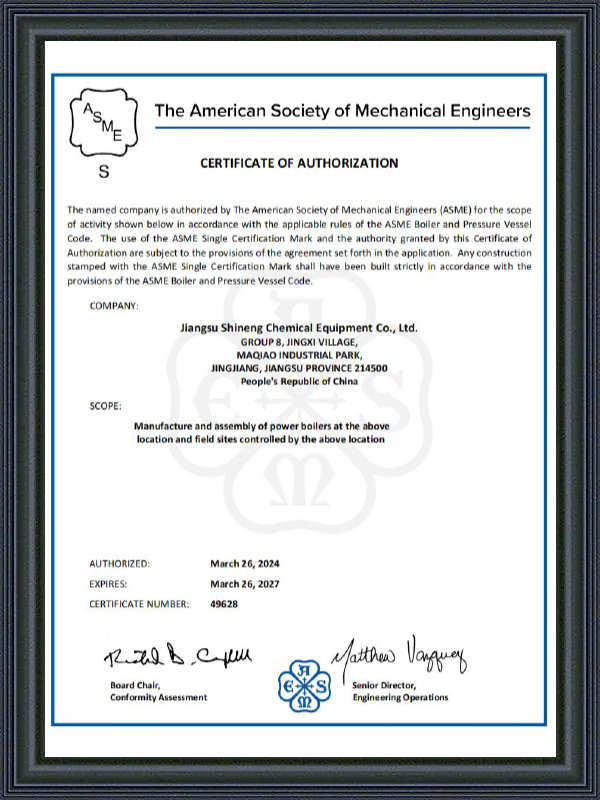
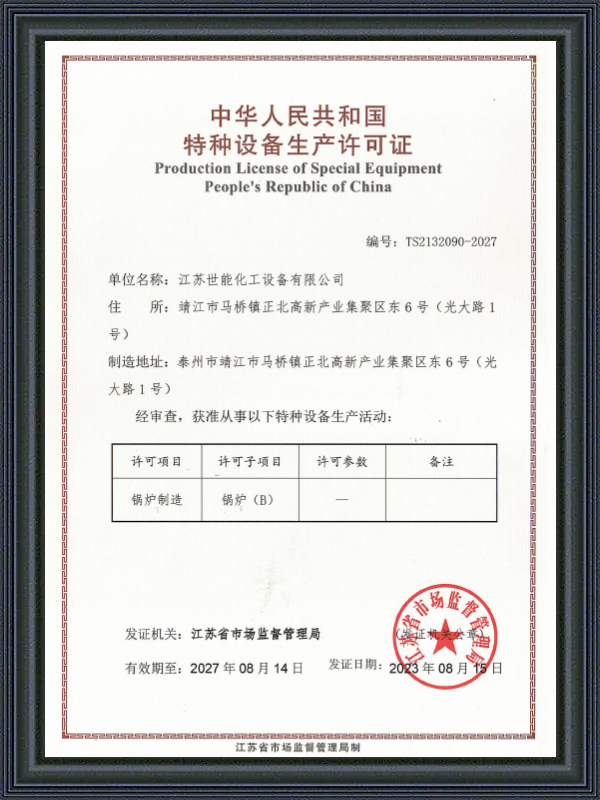
As China industrial cyclone dust collector manufacturer and cyclone collector supplier, Jiangsu Shineng Chemical Equipment Co., Ltd, founded in 2005, the company specializes in the R&D and manufacturing of flue gas waste heat recovery systems and chemical equipment, possessing comprehensive in-house capabilities spanning from heat pipe development and nickel-based brazing to pressure vessel fabrication. Our products are widely used in coal chemical, metallurgy, power generation, and synthetic ammonia industries, and have been exported to overseas markets.
A puddle under the casing of an industrial boiler is rarely just a plumbing problem. On a 60 t/h coke oven flue gas waste heat boiler, water appearing along a casing seam usually points to one of three things: a failed tube-to-tubesheet weld, a thinned economizer tube, or a weeping handhole gasket....
Boiler Safety Relief Valve Leaking: The Short Answer Before the Details
If a boiler safety relief valve is leaking, treat it as a defect on the pressure boundary, not as a housekeeping nuisance. The valve is the last mechanical barrier standing between a pressurised drum and an overpressure event, ...
Why a Boiler PRV Leaks: The Conclusion First
At three in the morning, a warm puddle spreads across the floor under a boiler that was running perfectly the day before. The natural reaction is to assume the valve has failed and order a replacement. That reaction is usually wrong. A boiler PRV leaking...
Cyclone Dust Collector (also called cyclone collector or industrial cyclone dust collector) is a widely used mechanical separation device that removes particulate matter from gas streams using centrifugal force. Unlike filter-based systems, a China Cyclone Dust Collector has no moving parts or filter bags, making it highly reliable for high-temperature and abrasive dust applications. Jiangsu Shineng Chemical Equipment Co., Ltd. — As China flue gas recovery unit manufacturer and waste heat recovery system company, Jiangsu Shineng Chemical Equipment Co., Ltd, founded in 2005, the company specializes in the R&D and manufacturing of flue gas waste heat recovery systems and chemical equipment, possessing comprehensive in-house capabilities spanning from heat pipe development and nickel-based brazing to pressure vessel fabrication. Our products are widely used in coal chemical, metallurgy, power generation, and synthetic ammonia industries, and have been exported to overseas markets. The same engineering excellence extends to our China Mechanical Dust Collector solutions for pre-filtration and dust burden reduction.
Typically, a cyclone dust extractor achieves collection efficiencies of 85% to 95% for particles larger than 10 microns, and up to 98% for particles >30 microns. It serves as a dust deputy cyclone in many plants, protecting downstream baghouses or scrubbers. The global cement and metallurgy sectors alone use over 300,000 cyclone units, recovering millions of tons of valuable dust annually (EPA technical review 2024).
1. How Does a Cyclone Dust Collector Work? (Operational Mechanism)
A industrial cyclone dust collector converts inlet gas velocity into a high-speed spiral vortex. Gas enters tangentially at the top (inlet velocity typically 15-25 m/s), creating a double vortex: outer downward helix forces dust toward the wall, while inner upward helix exits clean gas. The centrifugal acceleration ranges between 500 to 2000 G, causing particles to impact the conical wall and slide into the dust hopper.
For a standard Stairmand high-efficiency design, the cut diameter (d50) – particle size collected at 50% efficiency – is around 4-6 microns at pressure drop of 1.0-1.5 kPa. By optimizing inlet dimensions and cone length, Cyclone Dust Collector Supplier Jiangsu Shineng produces custom units that reduce particulate emissions to below 50 mg/Nm³ for coal chemical pre-cleaning. Data from a 2025 metallurgical installation showed removal of 92% of iron ore fines (size range 8-50 µm) before waste heat boiler.
2. Efficiency Comparison by Particle Size (Key Performance Data)
The table below summarizes typical fractional efficiency of a best cyclone dust collector according to ASME PTC 31 standards. For particles under 5 microns, a cyclone collector may serve as a pre-cleaner; however, pairing with a baghouse achieves overall efficiency >99.9%.
Horizontal bar analysis: The above chart illustrates the strong dependence of cyclone dust collector efficiency on particle diameter. For 5 micron dust (typical of fine metallurgical fume), efficiency remains only 42% which is why a China Mechanical Dust Collector alone may need polishing by baghouse. At 10 microns, efficiency rises to 70%, crossing the typical cutoff for pre-separation. Reaching 20 microns, the dust deputy cyclone captures 88% of material, significantly reducing downstream load. At 50 microns (e.g., coarse ash or sand), the cyclone extractor achieves 97% making it a standalone solution. These values come from particle size distribution tests conducted in coal chemical plants in Shanxi (2025). For optimal results, a best cyclone dust collector from Jiangsu Shineng is custom-designed around specific dust PSD.
3. Pressure Drop vs. Inlet Velocity (Operational Optimization)
A well-engineered industrial cyclone dust collector balances collection efficiency and energy consumption. The following line chart shows pressure drop evolution across a typical cyclone collector body as gas velocity increases. Data from laboratory scale validated by CFD simulation (Journal of Aerosol Science, 2024).
Line graph interpretation: For a China Cyclone Dust Collector, increasing inlet velocity from 10 m/s to 25 m/s raises pressure drop from 400 Pa to 1650 Pa – following a quadratic relationship (ΔP ∝ v²). The optimal operating zone for a cyclone dust extractor is typically between 16 and 20 m/s, achieving removal efficiency above 88% for 10-micron dust with moderate energy penalty (800-1200 Pa). Below 12 m/s, dust re-entrainment occurs, while above 22 m/s erosion of the cone accelerates and power costs increase sharply. Jiangsu Shineng’s industrial cyclone dust collector designs incorporate wear-resistant liners for high-velocity metallurgical duties. For a 50,000 m³/h gas flow, choosing 18 m/s instead of 24 m/s reduces fan power consumption by 38% while maintaining 90% collection of medium particles.
4. Industrial Adoption and Dust Load Reduction (Real-World Data)
Cyclone Dust Collector Supplier Jiangsu Shineng serves diverse sectors. The column chart below compares typical dust inlet concentration vs. outlet concentration for four major industries using a properly sized China Mechanical Dust Collector as pre-filter.
Column chart insights: The chart contrasts raw gas dust burden with cleaned gas after a high-efficiency dust deputy cyclone. In steelmaking (EAF off-gas), inlet dust concentration can reach 50 g/Nm³; a properly designed industrial cyclone dust collector reduces it to ~5.8 g/Nm³, representing 88.4% mass removal. For cement kilns, the reduction is from 35 to 4.5 g/Nm³ (87% efficient). Power plants burning pulverized coal see an inlet of 18 g/Nm³ dropping to 2.1 g/Nm³ (efficiency 88.3%). Such performance proves why best cyclone dust collector remains indispensable for pre-treatment. By lowering dust load, downstream bag filters extend their service life by up to 300% (field data from Jiangsu Shineng installation in Henan, 2025).
5. Cyclone Dust Collector vs. Alternative Technologies (Radar Comparison)
The radar chart below evaluates four key criteria: temperature tolerance, maintenance cost, collection efficiency for fine dust (2-5 µm), and capital cost. Cyclone (blue) excels in high temp & low maintenance.
Radar chart interpretation: The radar compares a China Cyclone Dust Collector (blue polygon) against a typical baghouse (red dashed). The cyclone collector scores maximum (10/10) on high-temperature tolerance (up to 450°C without issues), and 9/10 on low maintenance because no filter bags or pulse jets required. Capital cost is significantly lower (8/10). For fine dust efficiency (2-5 µm), cyclones achieve only 3/10 while baghouses reach 9/10. However, as a China Mechanical Dust Collector used in conjunction with a baghouse, it reduces the load on expensive fine filters, optimizing overall plant operating cost. In metallurgical waste heat systems, a cyclone dust extractor from Jiangsu Shineng protects the downstream waste heat boiler from abrasive ash. Case study: a copper smelter in Yunnan installed our industrial cyclone dust collector and reduced annual baghouse maintenance by 43%.
Therefore, selecting the right Cyclone Dust Collector Supplier ensures optimal geometry (inlet height, vortex finder diameter) for your PSD. Jiangsu Shineng combines CFD simulation with proprietary wear-resistant lining to deliver best cyclone dust collector systems for harsh environments.
6. Key Advantages of Jiangsu Shineng Cyclone Dust Collector Solutions
Custom-engineered dimensions per specific dust properties and flow rates (500 to 300,000 m³/h).
Heavy-duty construction with 6-12 mm abrasion-resistant steel plate, service life exceeding 12 years.
Integration with waste heat recovery systems – as a flue gas recovery unit manufacturer, we offer combined cyclone + WHB solution.
Proven export to overseas metallurgical and power projects (Indonesia, Kazakhstan, Chile).
As an experienced Cyclone Dust Collector Supplier, Jiangsu Shineng provides full technical documentation including efficiency curves, pressure drop predictions, and 3D model. For every China Mechanical Dust Collector inquiry, we perform particle size analysis to guarantee separation performance meeting local environmental standards (typically 50 mg/Nm³ outlet for pre-dedusting).
7. Frequently Asked Questions about Cyclone Dust Collector
Q1: What is the ideal gas velocity for a industrial cyclone dust collector?
Optimum inlet velocity for a cyclone dust extractor is 16-20 m/s. Below 12 m/s, particle re-entrainment reduces efficiency; above 22 m/s, erosion and pressure drop increase dramatically. Jiangsu Shineng designs each unit for a specific velocity based on dust abrasivity.
Q2: Can a cyclone collector handle sticky or moist dust?
Standard China Cyclone Dust Collector is less effective for hygroscopic or sticky dust due to wall buildup. However, adding a liner or using a “dry cyclone” with thermal insulation prevents condensation. For high moisture (>15% RH), we recommend a pre-heater or alternative design.
Q3: How does a dust deputy cyclone differ from a regular cyclone?
“Dust deputy cyclone” typically refers to a small, high-efficiency clear plastic cyclone for workshop vacuums. Industrial counterparts from Cyclone Dust Collector Supplier Jiangsu Shineng scale the same centrifugal principle for massive flow with thicker cone angles (12-15°). Both share no moving parts but industrial versions use heavy steel and achieve 95%+ for particles >15 µm.
For any further inquiry about best cyclone dust collector integration with waste heat recovery or chemical process, contact Jiangsu Shineng Chemical Equipment Co., Ltd. – your reliable partner since 2005.


 English
  русский
 Español